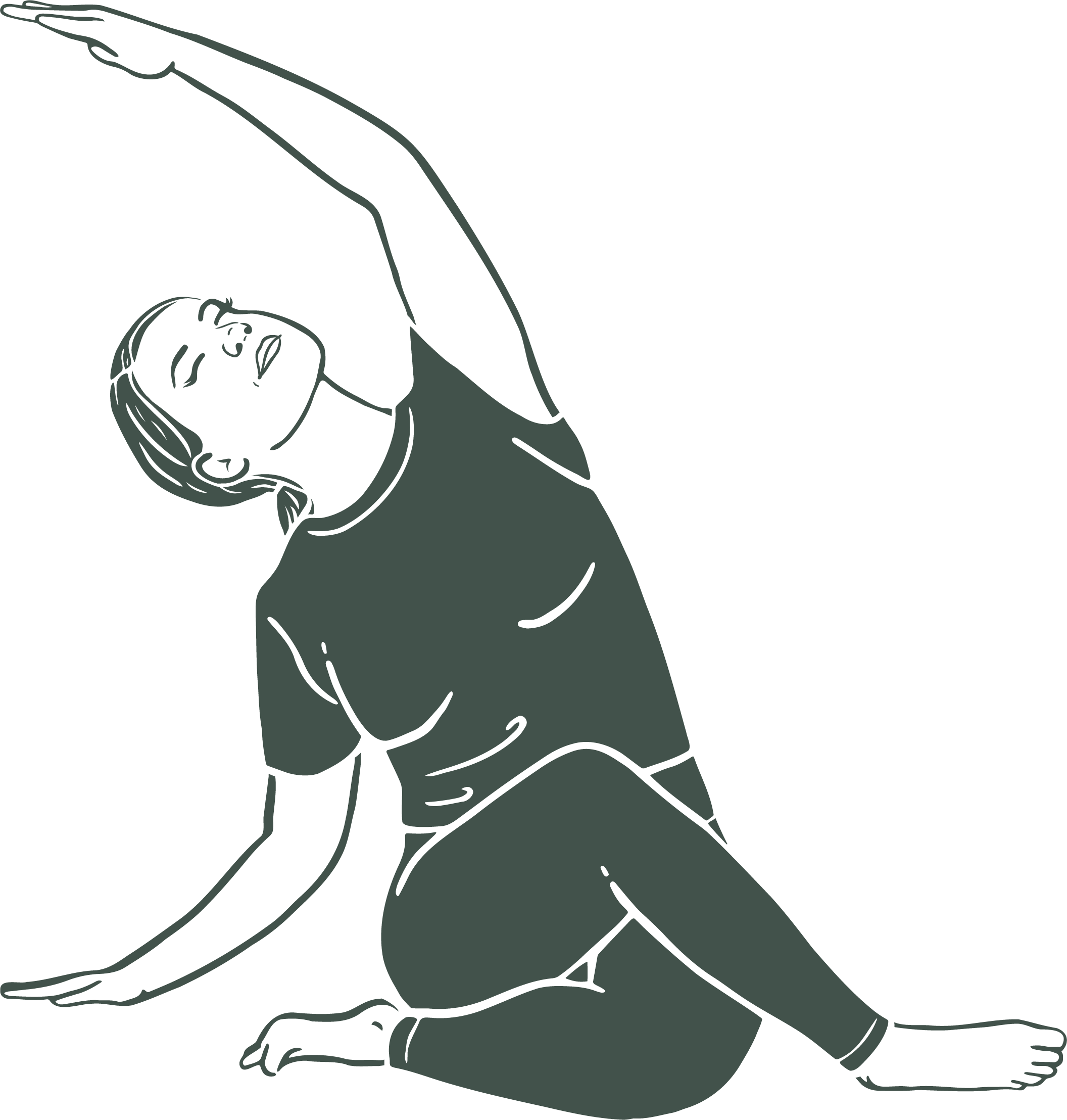
Wind-Relieving Pose (knees to chest) · A gentle Reclined Twist
How to do it
Come as you are. Lie on your back with both knees bent, feet on the floor.
Hug one knee in, loop a strap (or a belt or towel) around the ball of that foot, and hold an end in each hand.
Slowly extend the leg up toward the ceiling, only as far as the hamstring happily allows — a soft bend in the knee is completely fine and often kinder.
Let your shoulders, head and hips stay heavy on the mat. Walk your hands down the strap only to the point of a real but comfortable stretch — about 60–80% of your edge.
The lower leg can stay bent with the foot on the floor, or extend along the mat for a little more — whichever keeps your lower back at ease.
Relax your hands, your jaw and your belly. Settle in and breathe, then switch sides.
Why practise it
A long, supported release for the hamstrings and calves, with the floor taking all the weight so the whole back of the leg can soften.
Because you're lying down, the lower back and neck stay completely at ease — a gentler way to open the hamstrings than a seated forward fold.
A strap does the reaching for you, so there's no rounding or straining to hold on.
Calming and grounding — an easy shape to stay in and breathe.
Take care
Keep a soft bend in the knee — never lock it straight, especially if you're very flexible or have hypermobile joints.
If your lower back lifts or complains, bend the resting leg and place that foot on the floor to keep the pelvis grounded.
A broad, spreadable stretch down the back of the leg is soft-tissue tension — safe to explore slowly and patiently. A sharp, pulling or electric feeling behind the knee or down the leg is a nerve signal, not a stretch: ease straight off if you feel it.
Naturally tight hamstrings are completely normal — for athletic or very muscular bodies they're meant to be springy and strong. Work gently rather than chasing a deeper shape; length comes slowly, if at all, and that's absolutely fine.
Coming in & out
Into the pose
From lying on your back — hug one knee in and loop the strap around the foot
From Happy Baby — extend one leg up with the strap
Out of the pose
Bend the knee, slip the strap off, and lower the foot to the floor.
Hug both knees into the chest to rebalance before the second side.
Common questions
Do I need a strap for the reclined hamstring stretch?
A strap makes it much easier and more restful — it does the reaching so you can lie back and relax rather than straining to hold your foot. A belt, dressing-gown tie or towel works just as well.
How long should I hold it?
Around 2 to 4 minutes per side in Yin. Settle in, keep a soft bend in the knee, and let the back of the leg slowly release rather than forcing it.
What if my hamstrings are really tight?
Bend the raised knee generously and hold the strap higher up — you'll still get a deep, useful release. Flexibility comes with time and patient, regular practice, never from pushing.
Is it okay to keep my knee bent?
Absolutely — a soft bend in the knee isn't cheating. The back of the leg still releases, and bending the knee actually lets the hip fold more freely, so the stretch stays comfortable and useful. Straightening the leg is simply an option for a little more, never a requirement. Aim for a steady, spreadable stretch rather than a sharp pull.
Reclined Hamstring Stretch is one shape among many. When you'd like to put a whole sequence together into one long, slow practice, pop your email in and I'll send you my free two-hour Yin, restorative and Yoga Nidra retreat. Yours to keep.
No spam, ever. Unsubscribe any time. I'll only send Yin.
Check your inbox 🌙 your two-hour retreat is on its way.