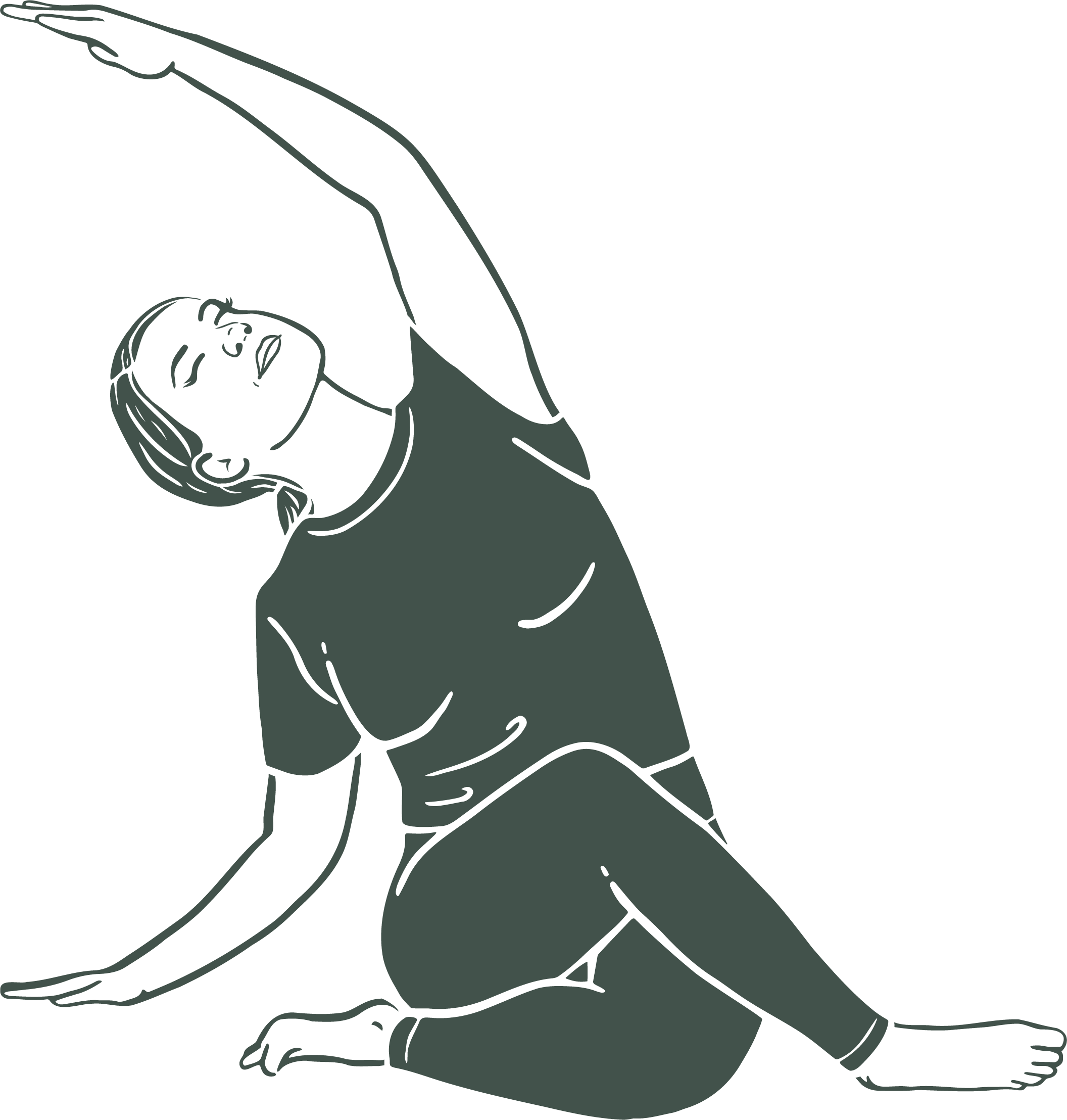
Corpse Pose · A gentle Reclined Twist to rebalance the spine
How to do it
Come as you are. Lie on your back and let yourself settle for a breath or two.
On an exhale, draw both knees in toward your chest and wrap your arms around your shins — or hold the backs of the thighs if that's kinder on the knees.
Let your shoulders, head and lower back stay heavy on the mat. There's no need to pull hard — just enough to feel a soft rounding through the lower back.
If it feels nice, you can rock a little side to side, or make slow circles with the knees, then come back to stillness.
For tender knees, keep a little space and hold behind the thighs; if you feel a pinch at the front of the hips, let the knees drift wider, out toward the ribs, rather than forcing them together.
Soften your jaw, and let each exhale carry you a touch deeper into the floor.
Why practise it
A gentle, reassuring release for the lower back — drawing the knees in rounds the lumbar spine and eases it after twists, folds and backbends.
The light pressure of the thighs against the belly gives a soft massage to the abdomen, which can help things feel more settled.
A soothing, self-contained shape often used as a rebound between poses or as a quiet moment before rest.
Hugging in is naturally calming — it turns the attention inward and slows the breath.
Take care
Knees: if hugging the shins compresses the knee joint, hold behind the thighs instead.
A pinch at the front of the hip, where the thigh meets the pelvis, is the bones meeting — not tightness you can stretch through. Simply take the knees a little wider, out toward the ribs, to move around it. There's no need to keep the knees glued together.
Pregnancy: take the knees wide apart, out toward the ribs, so there's no pressure on the belly — or skip in favour of a side-lying rest.
Recent abdominal surgery: approach gently or avoid, since the pose presses the thighs into the abdomen.
Coming in & out
Into the pose
From lying on your back — draw both knees in
From Reclined Twist or Happy Baby — return to centre and hug the knees in
Out of the pose
Release the feet slowly back to the floor, one at a time.
Or extend into Corpse Pose to rest.
Common questions
What is Wind-Relieving pose good for?
It's a gentle way to release the lower back and quiet the mind. Drawing the knees toward the chest rounds the lumbar spine after twists or backbends, and the soft pressure of the thighs on the belly can feel settling. It's often used as a rebound between poses.
How long do you hold knees-to-chest in Yin?
Usually 1 to 3 minutes, or just long enough to feel your lower back soften. It's a restful shape, so let comfort be your guide.
Is it safe for sore knees?
Yes — simply hold behind your thighs rather than wrapping your arms around your shins. That keeps the knee joint open and comfortable while you still get the lower-back release.
Why do my hips pinch at the front when I hug my knees in?
That pinch is usually the top of the thigh meeting the front of the pelvis — a matter of your own bone structure rather than tight muscles, so effort won't 'stretch' past it. The easy fix is to take the knees a little wider, out toward your ribs, which lets the shape open up comfortably. Your knees don't need to be together here.
Wind-Relieving Pose is one shape among many. When you'd like to put a whole sequence together into one long, slow practice, pop your email in and I'll send you my free two-hour Yin, restorative and Yoga Nidra retreat. Yours to keep.
No spam, ever. Unsubscribe any time. I'll only send Yin.
Check your inbox 🌙 your two-hour retreat is on its way.