None needed — Corpse is itself the integration and the close of your practice. · A slow seated pause afterwards to carry the stillness with you.
Time your hold
Three soft ticks and a bell when you're done, so you can close your eyes and stop watching the clock.
How to do it
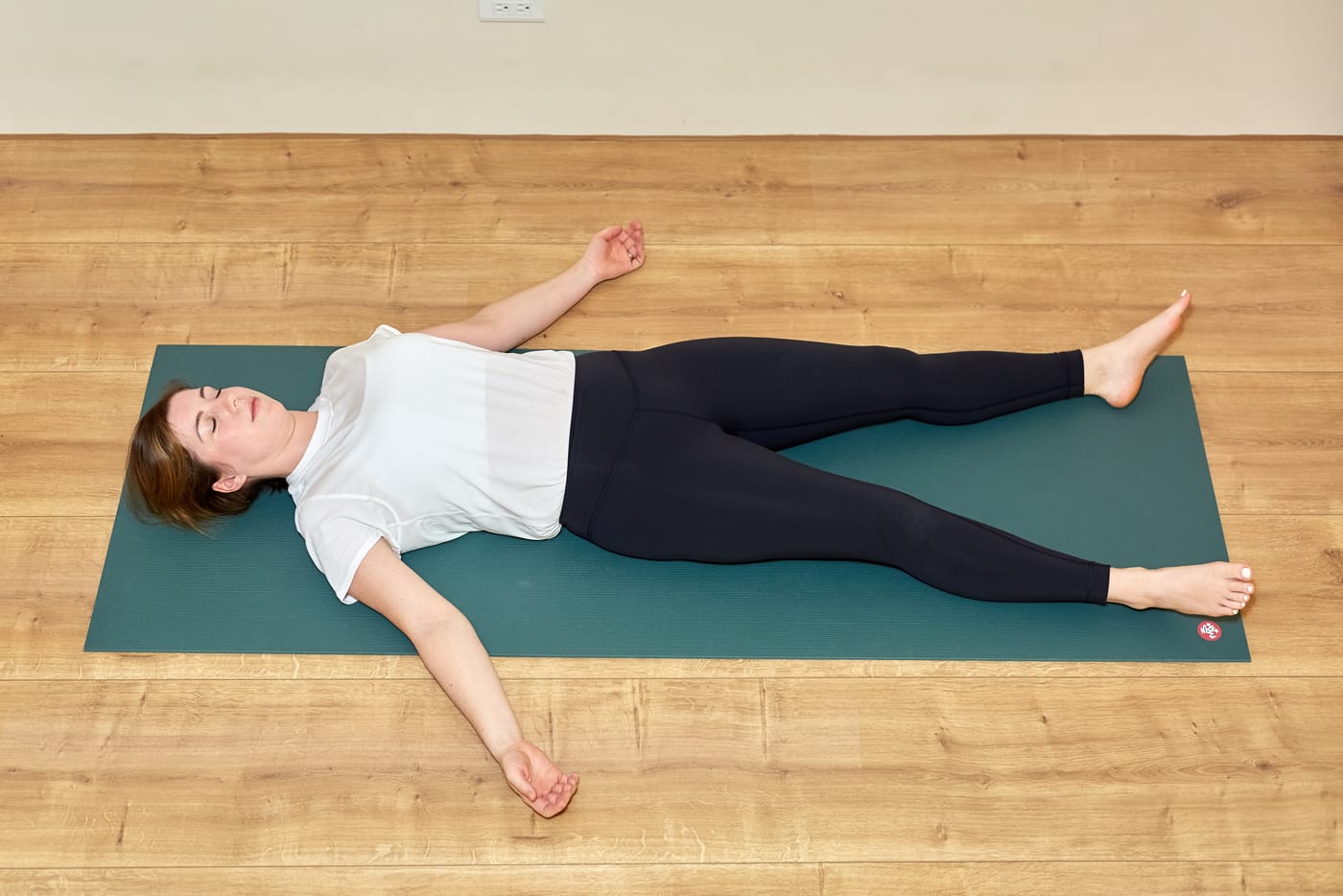
Lie flat on your back and let yourself be fully supported by the floor. There is nothing to hold or reach for here.
Let your feet fall open, arms a little away from your sides, palms soft and turned up.
If your lower back would like support, slide a bolster or rolled blanket under your knees; a blanket over the body keeps you warm as you cool.
Close your eyes, soften your face and jaw, and let the breath find its own slow rhythm. Be still.
This is a rest, not a stretch — simply let go and do nothing at all.
Why practice it
Invites total rest, letting the body settle completely after your practice.
Calms and settles the nervous system, shifting you toward the quiet, restorative part of your system.
Gives the body time to integrate the effects of everything you have practiced — this is where the work lands.
Helps release held tension in the muscles as you let the floor take all your weight.
Before you go
Want the follow-along version?
No spam, ever. Unsubscribe any time. I'll only send Yin.
Check your inbox 🌙 your two-hour retreat is on its way.
Take care
Lying flat may be uncomfortable later in pregnancy — rest on your side with a bolster between the knees instead.
If lying flat bothers your lower back, support the knees with a bolster or bend the knees with feet on the floor.
It is easy to drift toward sleep; that is fine, though a gentle return to the breath keeps you present.
Coming in & out
Into the pose
From sitting or any reclined pose, slowly lower yourself down to lie flat on your back.
Out of the pose
Come out slowly. Deepen your breath, wiggle your fingers and toes, then draw your knees in and roll gently onto one side.
Rest on your side for a few breaths, then press yourself up to sit with your head coming up last.
Common questions
How long do you hold Corpse Pose in Yin Yoga?
Around 5–10 minutes is typical. Because a Yin practice doesn't work the muscles hard, a slightly shorter rest — roughly 5 to 8 percent of your total practice time — is often enough. If you're practicing alone, a soft timer lets you stay relaxed without worrying about drifting off.
Why is Corpse Pose (Savasana) important?
It's the final rest that closes your practice. Lying completely still gives the body and nervous system time to absorb everything you've done, and many people find it deeply settling. Skipping it means missing the part of the practice where all the work quietly lands.
How do you do Corpse Pose?
Lie flat on your back and let the floor take all your weight. Let the feet fall open, rest the arms a little away from the body with palms turned up, and support the knees with a bolster if the lower back would like it. Close your eyes, soften the face, and let the breath find its own slow rhythm — there's nothing to stretch or hold.
Is Corpse Pose safe during pregnancy?
Lying flat on the back can feel uncomfortable later in pregnancy. A comfortable alternative is to rest on your side with a bolster or cushion between the knees, which offers the same complete rest without lying flat.
Corpse is one shape among many. When you'd like to put a whole sequence together into one long, slow practice, pop your email in and I'll send you my free two-hour Yin, restorative and Yoga Nidra retreat. Yours to keep.
No spam, ever. Unsubscribe any time. I'll only send Yin.
Check your inbox 🌙 your two-hour retreat is on its way.
Add this to your Home Screen: tap Share, then Add to Home Screen.