

the journal · for runners
Can You Actually Stretch Your IT Band? (What Runners Get Wrong)
you can't lengthen it, but you can change what pulls on it
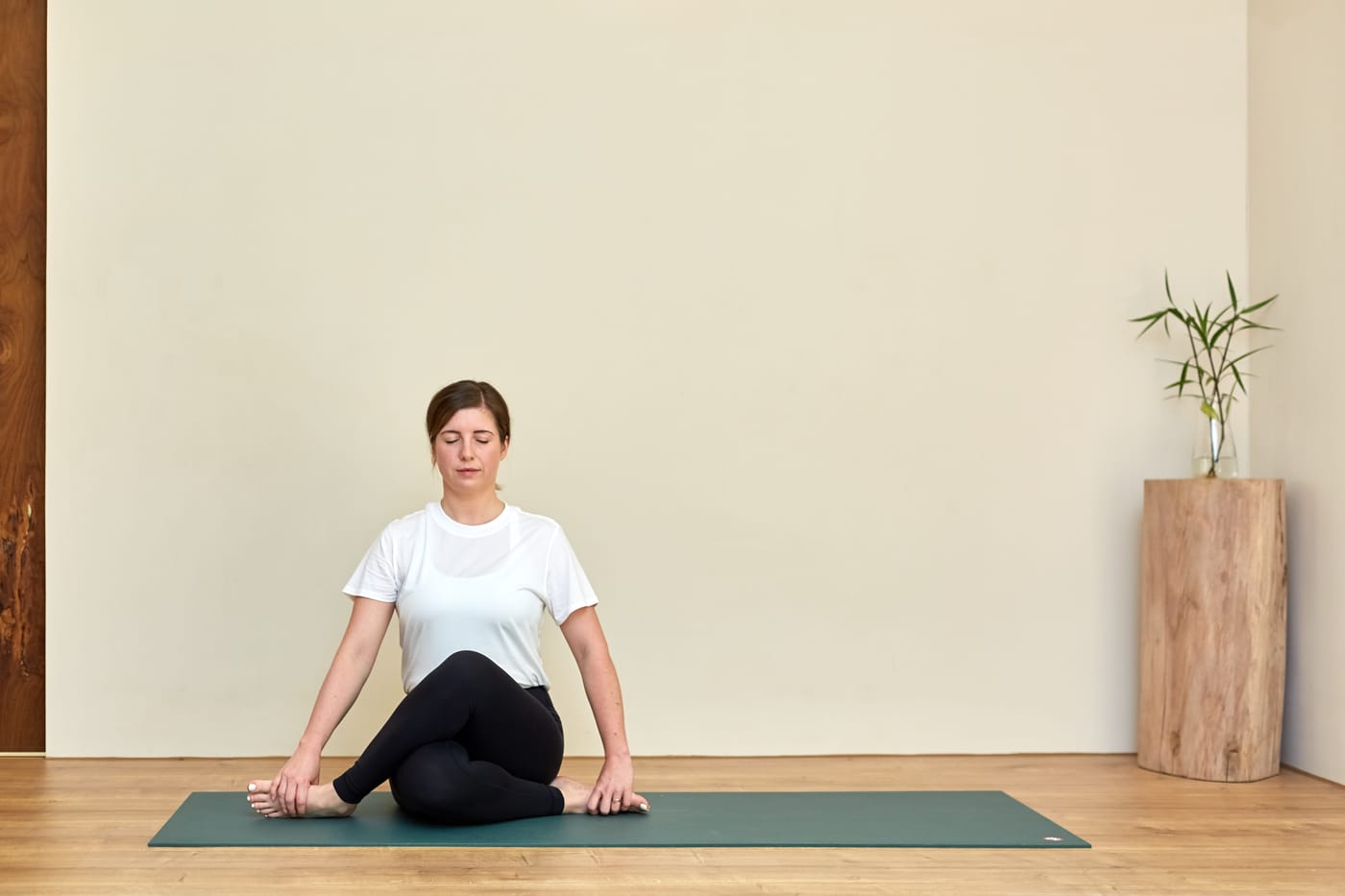
Somewhere in your first year of running, someone tells you your IT band is tight and you should stretch it. So you cross one leg behind the other, lean away, feel something vague down your side, and hope.
Then, when that doesn’t do much, you buy a foam roller. And rolling the outside of your thigh turns out to be one of the more unpleasant things you can do to yourself on a living-room floor, which feels like it must be working, because surely something that hurts that much is doing a job.
I’m sorry to say it mostly isn’t. Not the way you’ve been told, anyway.
What the IT band actually is
The iliotibial band isn’t a muscle. It’s a long, dense sheet of fascia — connective tissue — running down the outside of your thigh from your hip to just below the knee. Think less elastic band, more seatbelt webbing.
That matters, because muscles lengthen and fascia like this really doesn’t. When researchers have taken this tissue and pulled on it with forces well beyond anything you could produce lying on a mat, they’ve measured a few millimetres of change. Millimetres. Under a load you could never generate with your own body weight and a good intention.
So when a stretch “feels like it’s getting the IT band,” what you are almost certainly feeling is the muscle around it — and that’s not a disappointment. That’s the useful part.
Then why does it feel tight?
Because the band doesn’t work alone. It’s the anchor point for muscles that very much do change:
- The tensor fasciae latae — a small muscle at the front of your hip that feeds straight into the top of the band. Running, and sitting at a desk between runs, keeps it short and busy.
- The gluteus maximus — the back half of that attachment. Tired glutes let the hip drop, and the band takes up the slack.
- The quadriceps — running alongside the band down the front and outside of the thigh, doing a lot of braking work on every stride.
Tension in any of those pulls on the band. The band gets the blame because the band is where you feel it, somewhere around the outside of your knee at mile eight.
Why the foam roller is the wrong tool for the right instinct
Rolling directly on the band is hitting the one structure in the neighbourhood you can’t change. It’s also a fairly bony, nerve-rich strip, which is why it hurts so much more than rolling your quad.
If it makes you feel better afterwards — and for plenty of runners it genuinely does — that’s most likely a change in how sensitive the area is for a while, rather than any change in the tissue. That’s not nothing. It’s just not what the tin says, and it’s a hard way to buy twenty minutes of relief.
Spend the same ten minutes on the muscles that attach to the band instead. Same instinct, better target.
The shapes that do reach it
These go after the three attachments — the front of the hip, the glute, and the side line — with holds long enough to let the tissue actually respond. Nothing here should be sharp. About sixty to eighty per cent of what you can feel is the right depth, and less is fine.
1. Dragon — 2 to 3 minutes each side. A low lunge with the back knee down, which is the most direct thing you can do about the tensor fasciae latae and the front of the hip. Put a cushion under that back knee; there’s no prize for going without.
2. Deer — 2 to 3 minutes each side. Both knees drop to one side and you sit down between your heels. It rotates the hip gently and reaches the outer hip and glute without the intensity of a deep pigeon shape. Sit on a folded blanket if the floor feels a long way down.
3. Banana — 3 minutes each side. On your back, walk your feet and shoulders over to one side into a long crescent. This is the whole side line, hip to ribs, and almost no runner’s stretch routine goes near it. It’s also the one people are most surprised by.
4. Reclined Swan — 2 to 3 minutes each side. Ankle across the opposite thigh, draw the leg toward you. The glute, reached lying down, on legs that may not want to kneel.
If you have five minutes rather than twenty-five, do Dragon and Banana. Front of the hip, then the side line.
For the deeper version of the same idea, Shoelace stacks the knees and goes straight into the outer hip — it’s excellent, and it asks rather more of you than the four above.
The part that isn’t about stretching
Here’s the bit I’d rather tell you than leave out: if the outside of your knee hurts when you run, flexibility is probably not the main story.
Pain there is usually a load problem. Mileage that climbed too quickly, a lot of downhill, running the same camber on the same side of the road, or glutes that fatigue and let the hip drop late in a run. Runners who sort it out generally do so with training changes and some hip strength work, not by stretching harder.
A slow practice helps with the tightness that sits alongside all of that, and it helps you notice which side is which. It isn’t a treatment. If the pain is sharp, builds predictably as you run, or is only ever on one side, see a physiotherapist — that’s a much better use of your next few weeks than another roller.
Practise it with me
I’ve put those four shapes into a routine you can follow on the site, with the hold timer running so you don’t have to watch a clock: The Outside Line — no props, all levels, and you can make every hold shorter if you’d rather.
And if you’d like to be talked through a longer one, 25-Min Yin Yoga for Hips & Lower Back covers the same territory with more time in it.
Take good care of yourself.
While you're here
Want the follow-along class?
A filmed class with Katie: follow-along video, hold timer and written cues. Free, yours to keep.
No spam, ever. Unsubscribe any time. I'll only send Yin.
Check your inbox 🌙 your Post-Run Reset is on its way.
Common questions
Can you stretch your IT band?
No, not in any meaningful way. The iliotibial band is a thick sheet of fascia down the outside of the thigh, and it is extraordinarily stiff — studies putting real force through cadaver tissue have found only a few millimetres of give. No stretch you can do on a mat is going to lengthen it. What you can change is the tension in the muscles that attach to it.
Why does the outside of my knee hurt when I run?
The common cause is irritation where the IT band passes the outside of the knee, often turning up at a predictable point in a run and easing when you stop. It is usually a load problem — a jump in mileage, a lot of downhill, a camber, tired glutes — rather than a flexibility problem. It is worth a physiotherapist's opinion rather than more stretching.
Does foam rolling the IT band work?
It doesn't lengthen it, and rolling directly on the band itself is mostly just painful. If rolling makes you feel better it is likely changing how sensitive the area is rather than changing the tissue. Rolling the muscles around it — the glutes, the quads, the TFL at the front of the hip — is a gentler use of the same ten minutes.
What actually helps IT band tightness?
Releasing the muscles that tension it, and looking at your training load. The tensor fasciae latae at the front of the hip, the glutes behind it and the quads in front all feed into the band. Long, gentle holds for those, plus sensible mileage progression and some hip strength work, is the honest combination.
Should I stretch before or after a run?
After, while you're warm, or on a rest day. Long, still holds right before a run can leave your legs feeling a little loose and less powerful for the first mile.
From the mat
Ready to actually practice?
✦ A filmed class with Katie — free for you
Reading about it is one thing — feeling it is another. Pop your email in and I'll send you my free 15-Minute Post-Run Reset: a properly filmed class you follow along with me after your run, with a hold timer and written cues underneath. Yours to keep.
No spam, ever. Unsubscribe any time. I'll only send Yin.
Check your inbox 🌙 your Post-Run Reset is on its way.