

the journal · for runners
Tight Hips From Running (and Sitting All Day): What Actually Helps
the run tightens it, sitting makes it worse
If you run and you also sit at a desk, there’s a good chance your hips feel tight most of the time. Not injured. Just short at the front, a bit stuck, and never quite as free as they were a few years ago. You notice it getting out of the car, or in the first few strides of a run before things loosen up.
I’d like to explain where that comes from, because once you can see it, the fix is a lot less mysterious. And then I’ll give you four slow shapes that give the range back.
Why running tightens the front of the hip
Every stride swings your leg forward and back through a fairly small range. The hip flexors, the muscles across the front of the hip that lift the thigh, do that job thousands of times a run. They’re very good at it. What they don’t get, while you run, is a chance to lengthen fully. So over months they adapt by staying a little shorter and a little more braced, which is efficient for running and not so lovely for everything else.
Running on its own would probably be fine. The trouble is what comes next.
Why sitting makes it worse
When you sit, your hips are folded to roughly a right angle, and the hip flexors are held in a shortened position for as long as you’re in the chair. Eight hours at a desk, an hour in the car, an evening on the sofa. The muscle running asked to be a bit shorter is now being held short for most of the day.
So a runner who sits is doing the same thing from two directions. That’s why the hips feel tight even on the days you don’t run, and why a quick stretch after a run never seems to hold. You’re undoing ten minutes of the day and leaving the other ten hours alone.
What tight hips do to your stride and your back
A hip that won’t open fully changes your running quietly. If the leg can’t travel behind you, the stride shortens, and the body finds the missing range somewhere else, often by tipping the pelvis forward and arching the lower back. So a tight front of the hip often turns up as a lower back that aches after long runs, or a glute that never quite switches on.
None of this means anything is broken. It’s just tissue that’s been asked to stay short, and it will lengthen again if you give it what it actually responds to, which is time.
Why Yin, and why slow
Yin is simple. You settle into a shape, you find your edge, about 60–80% of what you could do, and you stay there for a few quiet minutes. Nothing forced, nothing bouncing. Gravity and your breath do the work.
A rushed thirty-second stretch mostly reaches muscle. The deeper tissue around the hip joint, the stuff that’s actually holding you, doesn’t respond to a quick pull. It responds to a few minutes of gentle, steady pressure. Which is oddly freeing: you don’t have to work hard here. You mostly have to stay.
Four holds for a runner’s hips
Do these after a run while you’re warm, or on a rest day. Take a slow half-minute between them. That pause is part of the practice, not a gap in it.
1. Dragon, for the front of the hip. A low lunge with the back knee down and the front foot forward, so the hips can sink toward the floor. This is the shape that reaches the hip flexors directly, and it’s where most runners feel the most. Ease in gently, keep the sensation in the hip rather than the knee, and let the weight of your body drop a little more with each breath. Two to three minutes each side.
2. Sleeping Swan, for the glutes and outer hip. Front shin angled across the mat, back leg long, then fold forward over the front leg and rest. This works the deep outer hip and the glute that so often stops pulling its weight when the front of the hip is tight. If the front knee complains, bring the shin closer to your body, or slide a cushion under that hip. Two to three minutes each side.
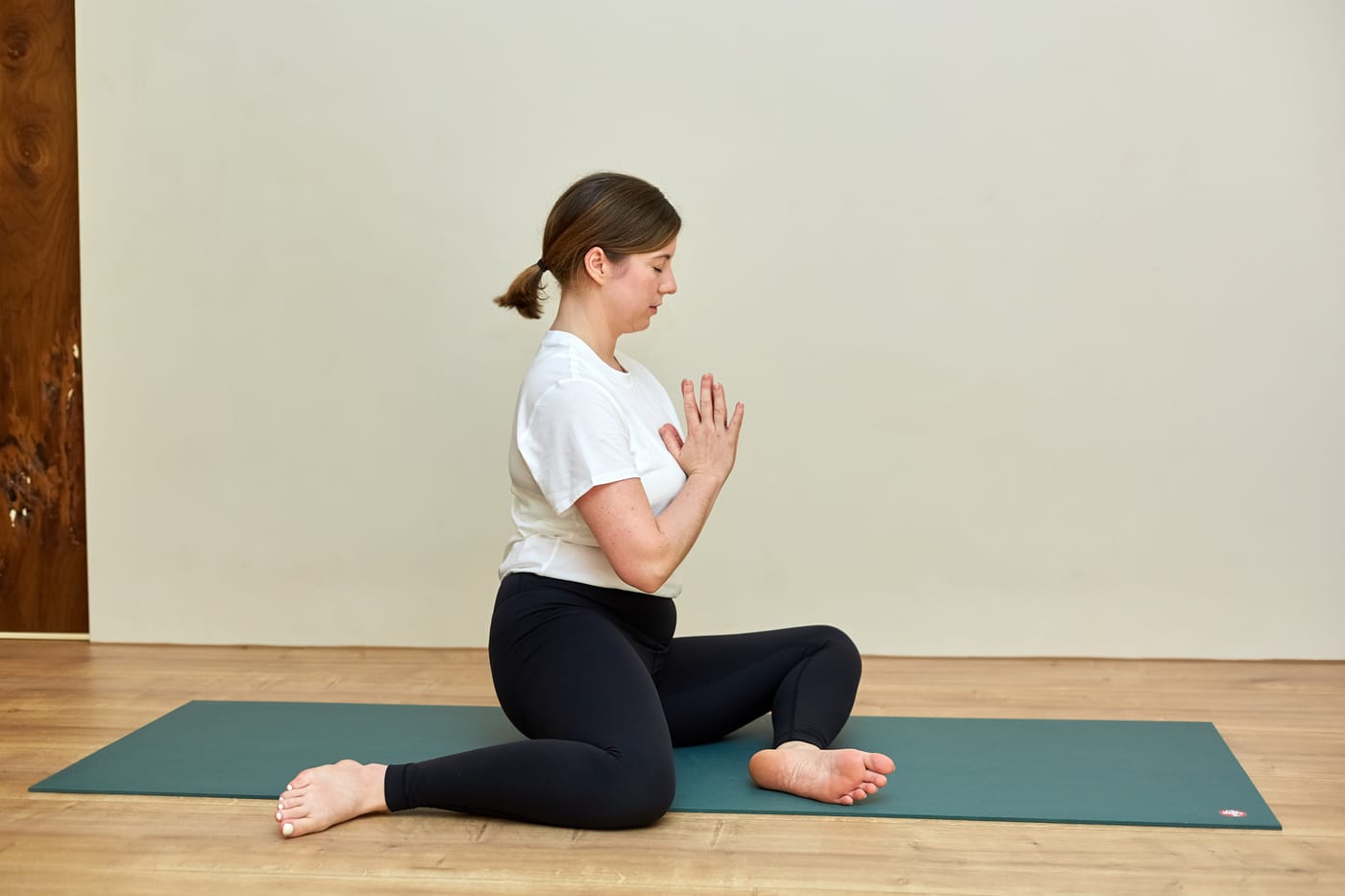
3. Deer, for both sides of the hip at once. Sit with one shin in front and the other swung around behind you, both knees at roughly a right angle. You can simply stay upright, tall through the spine, and that’s a complete pose. Deer reaches internal rotation, which the other shapes don’t, and it’s remarkably kind to the knees, so it’s a lovely counter after Swan. One to two minutes each side.
4. Reclined Twist, to settle. On your back, draw the knees across your body and let them drop. This gently undoes the compression every run puts through the spine, and it’s a nice, quiet place to finish. Two minutes each side.
That’s it. Front of the hip, back of the hip, both sides at once, and a twist to close. About twenty minutes if you take your time, and you can do the first two on their own when that’s all you have.
A note on pain
Everything above is about ordinary tightness, the kind that builds up and eases again. If you have a sharp, pinching feeling in the front of the hip, pain that catches on a particular movement, or something that’s been there for weeks and isn’t shifting, that’s a different thing, and it belongs with a physio rather than a stretch. Yin can sit alongside good treatment, but it isn’t a substitute for it.
Making it hold
The reason a quick post-run stretch never seems to last is that it’s up against the rest of the day. So the honest answer is little and often: a few slow minutes after runs, one longer session on a rest day, and if you can, standing up from the desk now and then. Tight hips took months to arrive. Give them a few weeks of this and they’ll start to leave.
If you’d like a practice for every place running tightens, hips, hamstrings, calves and the outer hip, with longer resets for rest days, that’s what I built The Runner’s Reset for. But start with these four. They’re most of it.
A gentle note: this is general education, not medical advice. Yin helps with everyday tightness. It doesn’t treat or prevent injury, and sharp or lasting pain belongs with a physio or doctor.
Take good care of yourself, Katie
While you're here
Want the follow-along class?
A filmed class with Katie: follow-along video, hold timer and written cues. Free, yours to keep.
No spam, ever. Unsubscribe any time. I'll only send Yin.
Check your inbox 🌙 your Post-Run Reset is on its way.
Common questions
Why are my hips so tight from running?
Every stride swings the leg through a fairly small range at the front of the hip, thousands of times, and the hip flexors adapt by staying a little shorter and a little more braced. Then most of us sit for the rest of the day, which holds the same muscles in the same shortened position. The two together are what most runners are feeling.
Should I stretch my hip flexors before or after running?
After, while you're warm, or on a rest day. Long, deep holds right before a run can leave the hip feeling a little loose and less springy, which isn't what you want at the start. Keep anything before a run short and moving.
Can tight hips cause lower back pain when running?
They can contribute. When the front of the hip is short, the pelvis tends to tip forward and the lower back picks up the slack, so a hip that won't open often shows up as a back that aches. Gently restoring the hip's range takes some of that load away. Sharp or lasting back pain is a different thing, and belongs with a physio.
How long does it take to loosen tight hips?
You'll usually feel a difference straight after one slow practice, and it fades again over a few days. The lasting change comes from little and often — a couple of short sessions a week, kept up for a few weeks — rather than one heroic stretch. This tissue responds to time, not effort.
Is Yin Yoga good for tight hips?
It's one of the best things for them. The hips are where Yin shines, because the deeper tissue around the joint doesn't respond to a quick thirty-second pull. It responds to a few quiet minutes in a shape, at about 60–80% of your range, held often enough.
From the mat
Ready to actually practice?
✦ A filmed class with Katie — free for you
Reading about it is one thing — feeling it is another. Pop your email in and I'll send you my free 15-Minute Post-Run Reset: a properly filmed class you follow along with me after your run, with a hold timer and written cues underneath. Yours to keep.
No spam, ever. Unsubscribe any time. I'll only send Yin.
Check your inbox 🌙 your Post-Run Reset is on its way.