

the journal · yin basics
Yin Yoga vs. Restorative Yoga: What's the Difference?
two slow practices, two different jobs
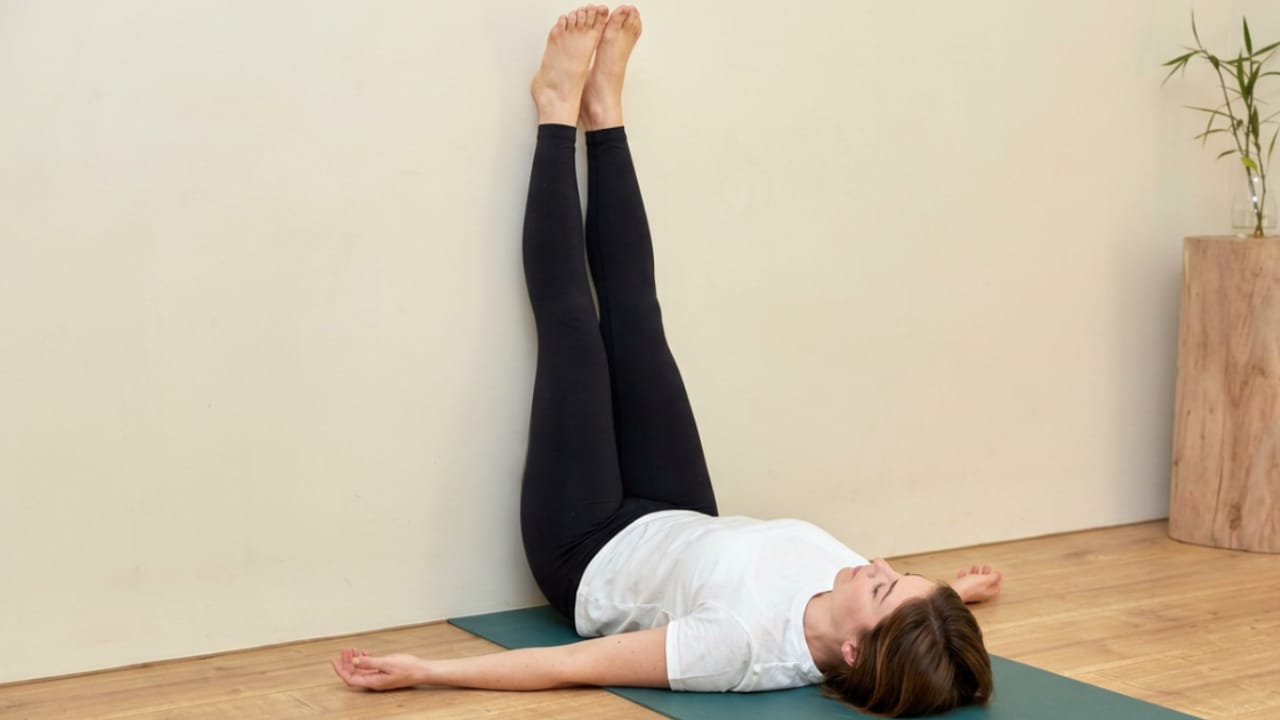
If you’ve ever scrolled past a “Yin Yoga” class and a “Restorative Yoga” class and wondered whether they’re the same thing — you’re in good company. They look alike: slow, quiet, floor-based, held for a long time, and deeply calming. But under the surface they’re doing two quite different jobs. Here’s the difference, in plain language, and how to pick the one your body actually needs today.
What is Yin Yoga?
Yin Yoga is a slow, still practice where you hold gentle floor-based shapes for a few minutes at a time — usually anywhere from two to five. You settle to a comfortable edge, where you feel a mild, steady stretch, and then you stay, softening rather than pushing.
The whole point of that long, patient hold is to reach the deeper connective tissue — the fascia and the tissues around your joints and hips — that a quick, active stretch never quite touches. There’s a gentle, purposeful sensation in Yin. Not pain, and never forcing — but you are working toward an edge.
What is Restorative Yoga?
Restorative Yoga has a different aim entirely: complete rest. Instead of finding a stretch, you use props — bolsters, blankets, blocks — to hold your body in total support, so there’s little to no sensation at all. Your muscles switch off, and the pose does nothing but let you be held.
Where Yin asks you to stay with a gentle stretch, Restorative asks you to do nothing whatsoever. It’s the practice of putting your body somewhere so supported that your nervous system finally lets go.
The main difference, in one line
Yin gently stresses the tissues to build mobility. Restorative fully supports the body for pure rest. Yin has an edge; Restorative has none.
Both are slow, both are calming, and both are wonderful for a busy, wound-up mind. The difference is what you’re asking of your body:
- Yin — a mild, held stretch → more mobility and flexibility over time, plus deep calm.
- Restorative — full support, no stretch → deep rest and recovery, and a settled nervous system.
Which one should you do?
A simple way to choose:
- You want more flexibility or to ease everyday tightness → Yin. Those long holds are what gently open the hips, hamstrings and back over time.
- You’re exhausted, frazzled, or recovering → Restorative. On the days you have nothing left to give, don’t chase a stretch — let yourself be held.
- You want to sleep, or to switch off a racing mind → either, honestly. Both slow your breath and settle your system. Reach for Restorative if you’re truly depleted, Yin if you’d also like a gentle stretch.
There’s no right or wrong here, and you don’t have to pick a side forever. Listen to what the day is asking for.
Can you combine them?
Absolutely — and many of my favorite practices do. A class might open with some Yin to release the hips and hamstrings, then melt into a few fully-supported Restorative shapes to finish, and close with a little Yoga Nidra (a guided, lying-down deep relaxation). You get the mobility and the deep rest in one slow, unhurried practice.
A few shapes live happily in both worlds — you’ll meet them in either kind of class:
- Legs Up the Wall — the single most restful shape in either practice.
- Reclined Butterfly — soles together, lying back, hips softly open.
- Supported Bridge — a block under the sacrum, a gentle passive opening.
- Banana Pose — a long, easy side-stretch you can do lying down.
Try both, and feel the difference for yourself
The best way to understand the difference is to feel it. If you’d like to experience Yin and Restorative flowing into one another — with a little Yoga Nidra to finish — my free two-hour retreat is exactly that: a slow, guided journey through all three, designed to calm your nervous system and melt off a busy week. It’s normally a members-only class, and it’s yours to keep.
However you practice, be gentle with yourself. Some days you need to stretch, and some days you just need to be held — and it’s a quiet kind of wisdom to know the difference.
Take good care of yourself, Katie
While you're here
Want to practise along?
No spam, ever. Unsubscribe any time. I'll only send Yin.
Check your inbox 🌙 your two-hour retreat is on its way.
Common questions
Can beginners do both Yin and Restorative yoga?
Yes — both are gentle, slow and beginner-friendly, and neither asks for any flexibility. They're two of the kindest ways to start a practice.
Which is better for stress or a busy mind?
Both calm you beautifully. Reach for Restorative when you're truly depleted and just need to be held, and Yin when you'd also like a gentle stretch. On many evenings, either is exactly right.
Do you need props for Restorative yoga?
Yes — props are the whole point of Restorative; bolsters, blankets and blocks hold you in full support. Yin needs few or none.
Is one more of a workout than the other?
Neither is a workout — both are about rest and mobility rather than effort or calories. If you want to sweat, this isn't the practice; if you want to unwind, it's perfect.
From the mat
Ready to actually practice?
✦ A members-only class — free for you
Reading about Yin is one thing — feeling it is another. Whenever you're ready, pop your email in and I'll send you my free two-hour Yin, restorative and Yoga Nidra retreat. Two slow hours to properly switch off, yours to keep.
No spam, ever. Unsubscribe any time. I'll only send Yin.
Check your inbox 🌙 your two-hour retreat is on its way.