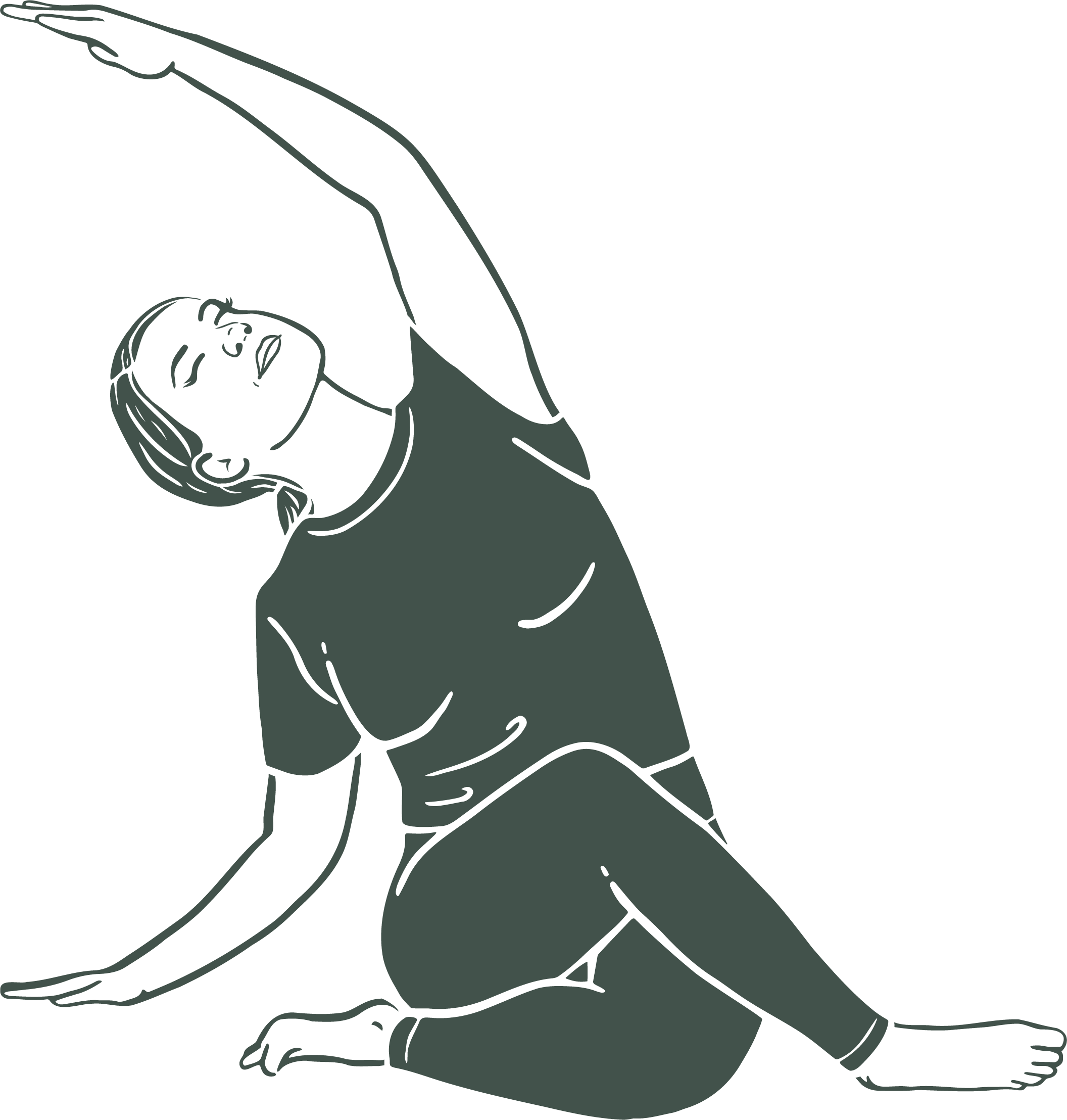
A forward fold such as Caterpillar to neutralise the spine · Corpse Pose to rest
How to do it
Come as you are. Sit in a comfortable cross-legged Easy Pose — perch on the edge of a cushion if your lower back likes to round.
Rest your left hand on your right knee and bring your right hand to the floor behind you.
Breathe in and grow tall through the crown of your head; breathe out and turn gently toward the right, starting the twist low in the belly and letting it travel up the spine.
Let your gaze follow last, turning the head only as far as the neck is happy to go.
This is a Yin hold, so find a soft, sustainable edge — about 60–80% — and then stop working and simply breathe there.
With each exhale, feel the spine lengthen a fraction and the twist deepen on its own. Slowly unwind, pause in the centre, then turn to the other side.
Why practise it
A gentle wringing-out of the spine that eases tension along the back and between the shoulder blades.
Stretches the obliques, the sides of the ribs and the shoulders while keeping the whole shape easy and upright.
Twists are traditionally seen as cleansing and refreshing — a lovely way to feel a little lighter and more spacious.
Sitting tall while you twist encourages length in the spine and steady, even breathing.
Take care
Keep the twist gentle and led by the breath — never crank on the knee or force the head around. How far you turn is judged by the spine, not by how far the head or shoulder travels.
How much you rotate is shaped by your own spine, ribs and hips, and most bodies turn a little further one way than the other. That's normal, not something to fix or force — meet your own honest edge on each side.
Pregnancy: twist 'open' (turning toward the back hand and keeping length across the belly) rather than pressing the belly into the thigh.
Go slowly and stay shallow if you have any disc or spinal condition, or simply enjoy the length without much rotation.
Coming in & out
Into the pose
From Easy Pose or any comfortable seat
From Shoelace or Caterpillar — sit tall and turn
Out of the pose
Unwind slowly back to centre and sit for a breath before the second side.
Fold forward gently over the legs, or lie down for a Reclined Twist.
Common questions
What are the benefits of a seated twist in Yin Yoga?
It gently eases tension along the spine and between the shoulder blades, stretches the sides of the body and shoulders, and leaves you feeling lighter and more spacious. Held slowly, it's also quietly calming.
How long do you hold a seated twist?
About 1 to 3 minutes on each side. Find a comfortable edge, then let the breath do the work — with each exhale the spine lengthens and the twist softens a little deeper on its own.
How do I protect my lower back in a seated twist?
Sit up on the edge of a cushion or folded blanket so the pelvis can tilt slightly forward and the lower back doesn't round. Begin the turn low in the belly, stay tall, and keep it gentle.
Why can I twist further to one side than the other?
That's completely normal. How far you rotate is shaped by your own spine, ribs and hips, and most bodies are a little more open on one side — it isn't something to fix or force. Work to a comfortable edge on each side and let the breath, not effort, carry the turn. Where you stop is simply where your body stops today.
Seated Twist is one shape among many. When you'd like to put a whole sequence together into one long, slow practice, pop your email in and I'll send you my free two-hour Yin, restorative and Yoga Nidra retreat. Yours to keep.
No spam, ever. Unsubscribe any time. I'll only send Yin.
Check your inbox 🌙 your two-hour retreat is on its way.