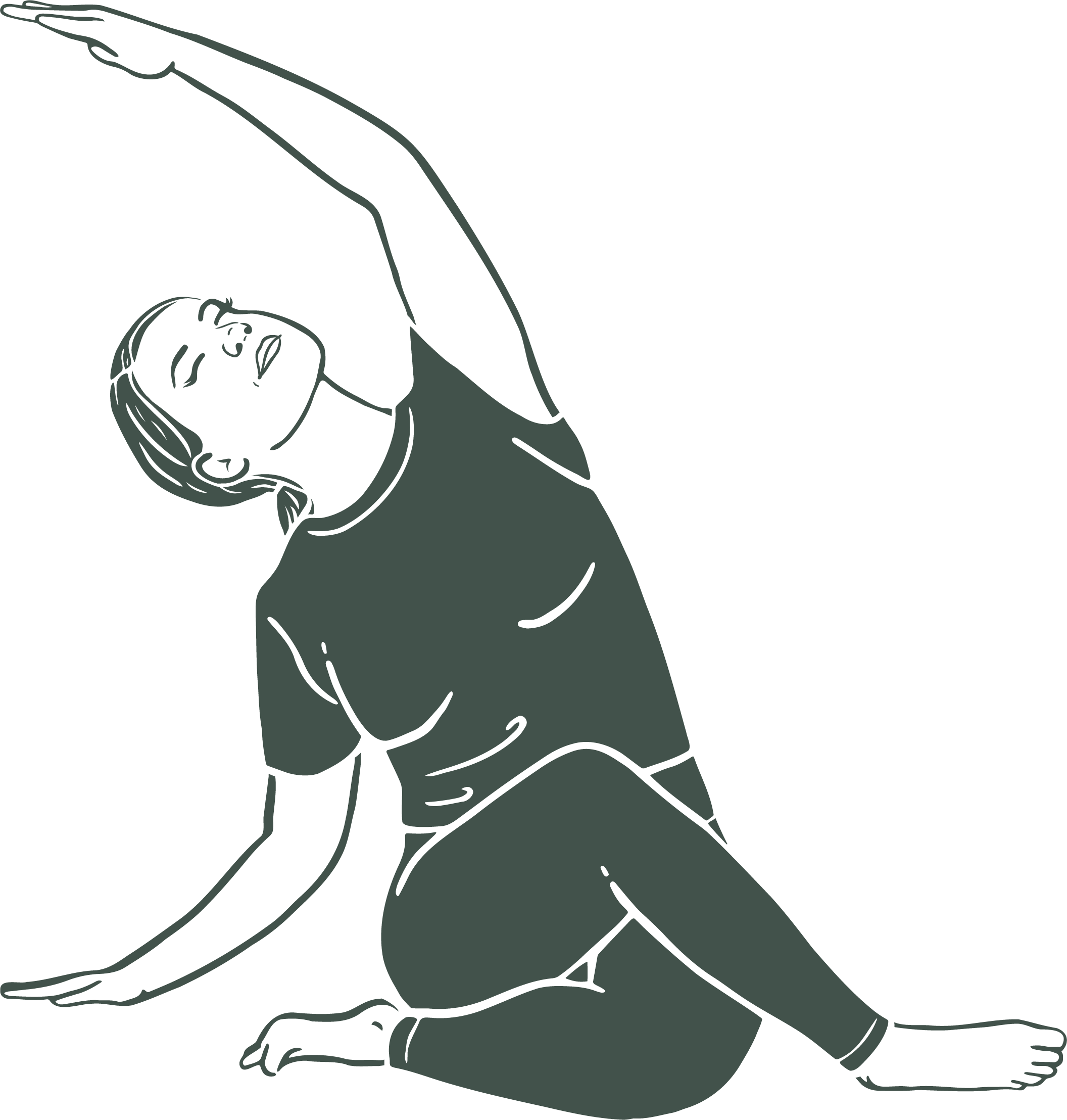
Child's Pose · Wind-Relieving Pose (knees to chest) to release the lower back
How to do it
Come as you are. Lie down on your front and turn your head to one side, or stack your hands and rest your forehead on them so the neck stays long.
Let your legs settle wide, heels falling out to the sides, tops of the feet heavy on the mat.
If your lower back feels at all compressed, slide a folded blanket under your hips and belly to take the arch out.
Soften your shoulders down away from your ears and let your elbows rest wherever is comfortable.
Now do nothing at all. Feel the belly press into the floor as you breathe in, and release as you breathe out.
Stay and grow heavy. If you turned your head to one side, swap sides halfway through so the neck stays even.
Why practise it
A completely passive, face-down rest that lets the whole back body soften and the spine settle into neutral.
Gently decompresses the lower back — a lovely, quiet counterpose after backbends like Sphinx, Seal or Saddle.
Encourages slow belly breathing: with the abdomen against the floor, each breath is felt low and full, inviting the body to settle and the breath to slow.
A grounding, surrendering shape that signals the body it's safe to let go.
Take care
Later pregnancy: lying face-down isn't suitable — rest instead in a side-lying position or supported Child's Pose.
If lying flat pinches the lower back, that's often the lumbar spine being pressed into a small arch — slide a folded blanket under the hips and belly to take the arch out, or choose a different rest such as Corpse Pose.
Turning the head to one side for a long time can bother the neck — stack the hands under the forehead instead, or change sides partway through.
Coming in & out
Into the pose
From Sphinx or Seal — simply lower all the way down onto the belly
From tabletop or Child's Pose — slide the legs back and lie down on the front
Out of the pose
Press gently back into Child's Pose to rebalance the lower back.
Or roll slowly onto your back and hug the knees in toward the chest.
Common questions
What is Crocodile pose used for in Yin Yoga?
Crocodile is a passive, face-down resting pose. It's most often used as a quiet counterpose after backbends — a chance to let the lower back decompress and the whole body soften — and to settle into slow, calming belly breathing.
How long do you hold Crocodile?
Anywhere from 1 to 5 minutes, or however long feels restful. There's nothing to achieve here — it's a place to rest and breathe, so stay as long as it feels good.
Is Crocodile suitable for beginners?
Yes — it's one of the most accessible shapes in Yin. If lying flat bothers your lower back, slip a folded blanket under your hips and belly, and rest your forehead on stacked hands to keep your neck comfortable.
Is Yin Crocodile the same as the crocodile push-up?
No — they share a name but not a purpose. In some yoga traditions 'Crocodile' means a strong, push-up-style pose that builds upper-body strength. The Yin version here, Makarasana, is the opposite: a completely passive, face-down rest with no effort at all. If you've met an energetic 'crocodile' elsewhere, this calm one is a different shape entirely.
Crocodile is one shape among many. When you'd like to put a whole sequence together into one long, slow practice, pop your email in and I'll send you my free two-hour Yin, restorative and Yoga Nidra retreat. Yours to keep.
No spam, ever. Unsubscribe any time. I'll only send Yin.
Check your inbox 🌙 your two-hour retreat is on its way.