A slow hug of the knees into the chest · Rest in Corpse for a few breaths before you get up
How to do it
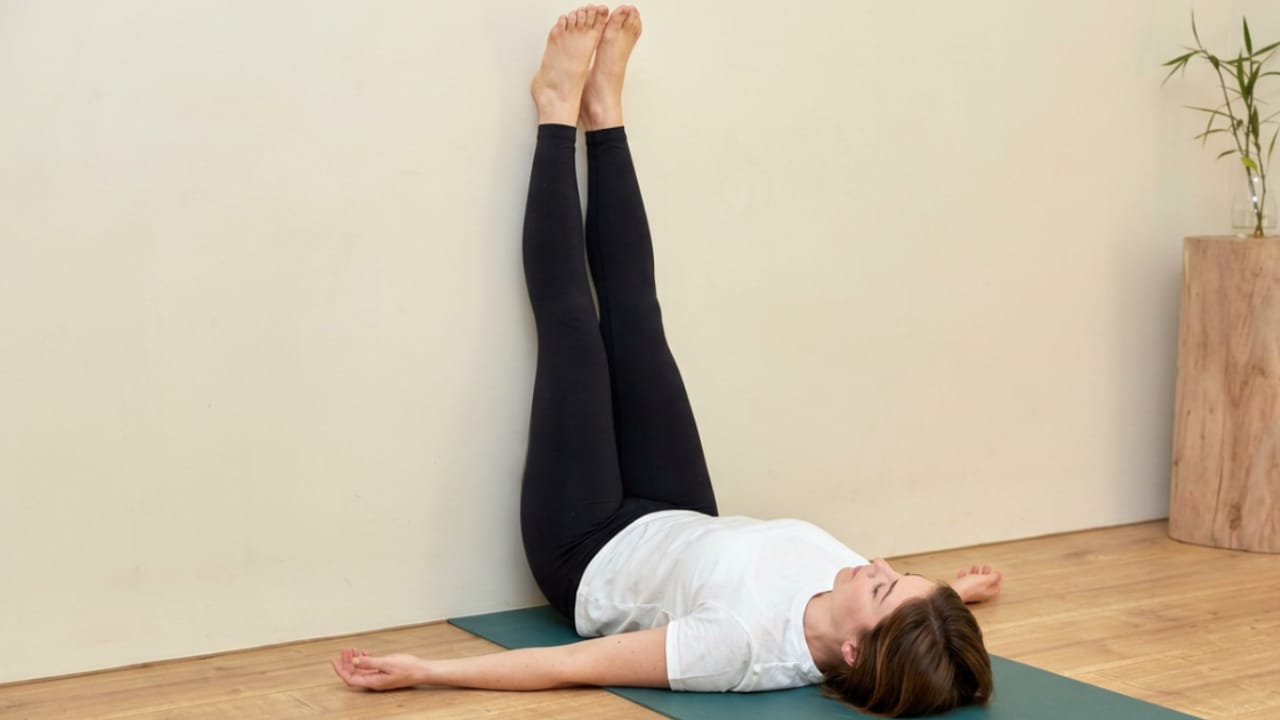
Sit sideways against the wall, one hip as close to it as is comfortable.
Lower onto your back as you swing your legs up the wall, shuffling your seat closer until your legs rest up and your back is flat on the floor.
If your hamstrings feel tight, slide your seat a little away from the wall so the legs can soften; the closer to the wall, the stronger the stretch.
Let your arms rest wherever is easy — out to the sides, on your belly, or overhead. Soften your jaw and let your face go quiet.
There's nothing to reach for here. Let the wall hold your legs, let the floor hold you, and simply rest. Stay 5–15 minutes.
For extra comfort, slide a folded blanket under your hips or head.
Why practise it
A deeply restorative shape — resting your legs up the wall lets the whole body downshift and the nervous system settle.
Eases tired, aching or swollen legs and feet by letting gravity help the blood and fluid flow back toward the heart.
Gives the lower back a gentle, well-supported release without any effort.
A soft stretch for the backs of the legs — only as much as feels easy.
A lovely one before bed, or any time you feel wired, drained or on your feet too long.
Take care
Legs Up the Wall is a mild inversion. Approach with caution, or choose a different rest pose, if you have uncontrolled high blood pressure, glaucoma or other eye-pressure conditions.
If your feet tingle, go numb or feel cold, bend your knees, come down for a moment, or move your seat further from the wall.
In later pregnancy, resting flat on your back can feel uncomfortable — prop your upper body up on cushions, or take a side-lying rest instead.
Come out slowly. Roll to your side and pause before sitting up, so you don't feel dizzy.
Coming in & out
Into the pose
From sitting sideways against the wall — lower onto your back and swing the legs up.
Out of the pose
Bend your knees, roll gently onto one side, and rest there for a few breaths before pressing up to sitting — slowly, so you don't feel light-headed.
Common questions
How long do you hold Legs Up the Wall in Yin Yoga?
Anywhere from 5 to 15 minutes. It's a restful, restorative shape, so the longer you can comfortably stay, the more the body settles — but come down sooner any time you need to.
Is Legs Up the Wall suitable for beginners?
Yes — it's one of the gentlest, most accessible shapes there is, and a lovely place to start. There's nothing to stretch into and nothing to force; you simply rest. Read the cautions on this page first if you have high blood pressure or eye-pressure conditions.
What is Legs Up the Wall good for?
It calms the nervous system, eases tired or swollen legs and feet, and gives the lower back a soft, effortless release. It's a beautiful way to wind down before bed or reset after a long day on your feet.
What's the difference between Legs Up the Wall and Corpse pose?
Both are restful, effortless shapes, but Legs Up the Wall raises the legs against a wall so gravity helps drain the legs and it becomes a gentle inversion, while Corpse rests flat with the whole body on the floor. Legs Up the Wall is the one to choose when your legs feel tired or heavy.
Do you need props for Legs Up the Wall?
No — just a wall and a bit of floor. If you'd like, a folded blanket under the hips or head adds comfort, and cushions under the upper body make it kinder in later pregnancy.
Legs Up the Wall is one shape among many. When you'd like to put a whole sequence together into one long, slow practice, pop your email in and I'll send you my free two-hour Yin, restorative and Yoga Nidra retreat. Yours to keep.
No spam, ever. Unsubscribe any time. I'll only send Yin.
Check your inbox 🌙 your two-hour retreat is on its way.