Yin Routine · All Levels
22 minutes for legs that ache this morning
22 min · 5 poses · no props
For the morning after a long run or a race, when the stairs are the hardest part of your day. Everything here happens lying down — no kneeling, no weight through sore legs, nothing that asks anything of you. It will not make the soreness disappear, and anyone who tells you a stretch can is selling something. What it will do is get the blood moving, unclench the bracing that soreness creates, and make the day feel a good deal more liveable. Find a bit of wall and come as you are.
Before you press play
A filmed class with Katie: follow-along video, hold timer and written cues. Free, yours to keep.
No spam, ever. Unsubscribe any time. I'll only send Yin.
Check your inbox 🌙 your Post-Run Reset is on its way.
Press play and follow along — each hold is timed, with a gentle chime and fifteen seconds to move into the next pose. Use Skip or Prev to move at your own pace.
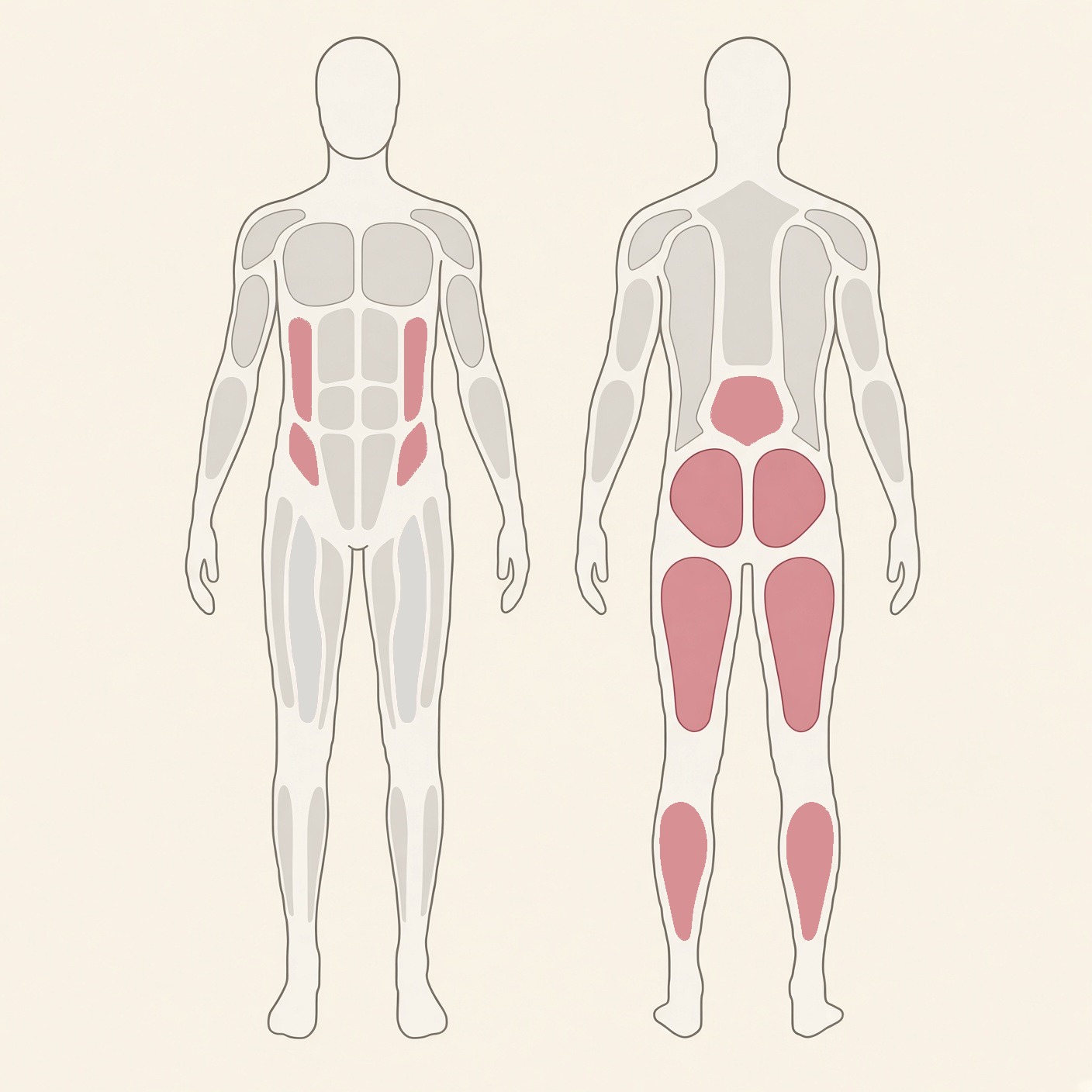
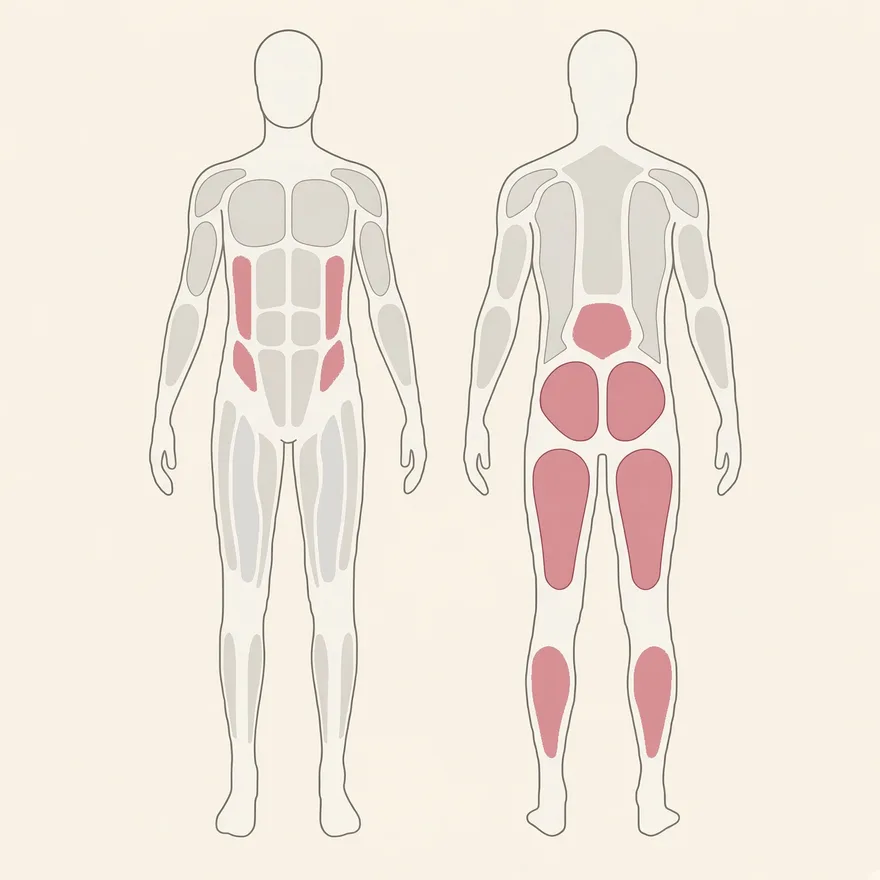
On Strava? Finish this routine and press Log to Strava to post it to your feed: the poses, the holds, and the body map. First, connect your Strava from your account page. It takes one tap, once.
Gently, yes — but not to fix the soreness. Stretching hasn't been shown to prevent or cure delayed-onset muscle soreness, so anything promising that is overselling. What gentle movement does do is keep you from stiffening up around it, and it feels considerably better than lying still all day.
It usually turns up 12 to 24 hours after the effort, peaks somewhere around 24 to 48 hours, and eases off after that. If it's still there at day four, or it's sharp rather than achy, that's worth a physio's opinion rather than another stretch.
An easy run often makes ordinary soreness feel better, oddly enough. But sore is different from painful — if something is sharp, one-sided, or changes how you move, take the day.
No, just a bit of clear wall. A cushion under the head is welcome, and a blanket over you for the last few minutes if you're the sort who gets cold lying still.
Yes — this is for the next morning, not for straight after. Everything is done lying down, because sore legs don't want to kneel, and nothing goes deep, because deep isn't what a recovering muscle is asking for.
For your next run
✦ A filmed class with Katie — free for you
This page is a routine with a timer. The Post-Run Reset is the full thing: a properly filmed 15-minute class you follow along with me, with the hold timer and written cues underneath. Pop your email in and I'll send it, yours to keep.
No spam, ever. Unsubscribe any time. I'll only send Yin.
Check your inbox 🌙 your Post-Run Reset is on its way.