

the journal · practice
How Long Should You Hold Yin Yoga Poses? (And Why)
long enough to let go
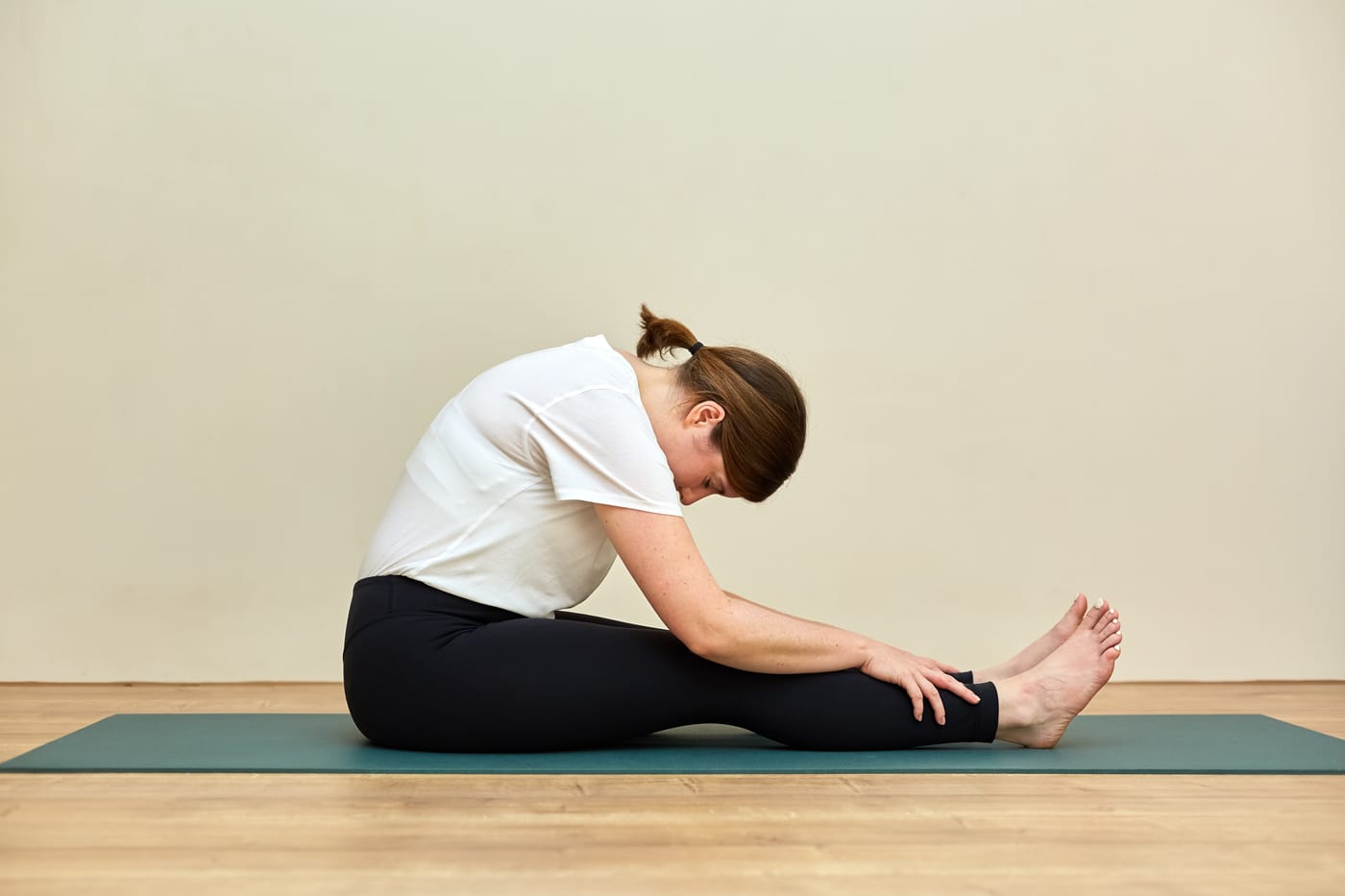
Most Yin Yoga poses are held for two to five minutes. If you’re new, it’s perfectly fine to start around one to three minutes and build up over the weeks; more experienced practitioners often settle in for five minutes or longer in the gentler shapes. But the exact number matters less than the principle behind it — so here’s how to find the right hold for you, and how to know when it’s time to come out.
Why are Yin poses held so long?
In faster, “yang” styles of yoga, you might hold a shape for a few breaths — long enough to work the muscles. Yin is aiming somewhere deeper: the connective tissues, the fascia and the ligaments around the joints. Those tissues don’t respond to quick effort the way muscle does; they respond to gentle, sustained time. A short stretch works the muscle and lets go; a long, still hold gives the deeper tissue the slow, patient load it responds to.
There’s a second reason, and it might be the more important one: staying still for minutes at a time is deeply quieting. Long, unhurried holds and slow breathing are widely associated with a shift toward the body’s rest state — which is exactly why Yin feels so calming, and why it’s such a lovely practice for the evening.
So how long is right for me?
Use these as a starting point, not a rule:
- Brand new to Yin: 1–3 minutes per pose. Let the shapes and the stillness become familiar first.
- Comfortable with the practice: 2–5 minutes is the everyday range.
- Gentle, well-supported poses (propped, reclined): you can happily stay 5 minutes or more.
- Two-sided poses (anything “per side”): give each side its own full hold.
The honest answer to “how long?” is: long enough that the shape has time to work, and no longer than you can stay comfortably with your breath. Some pose pages here suggest a range — see Caterpillar, Sleeping Swan or Saddle for a sense of typical hold times — but your body has the final say on any given day.
Is holding longer always better?
No. Past a certain point, more time isn’t more benefit — and pushing a long hold when you’re straining or clenching can do the opposite of what Yin is for. The quality of your stillness matters more than the number on the clock. If you’re gripping, fidgeting or bracing, that’s your sign to ease off or come out, not to tough it out.
How do I know when to come out?
Come out — gently and a little sooner — if you notice:
- Any sharp, pinching or electric sensation (that’s a nerve or joint signal, not a stretch).
- Numbness or tingling in the limbs.
- That you’re holding your breath or your mind has gone from calm to gritted.
When you do come out, do it slowly, and rest for a few breaths in a simple counterpose (a gentle Reclined Twist, or hugging the knees in) before the next shape. After a long hold the joints can feel fragile for a moment — that passes.
The easiest way to time your holds
You don’t have to watch a clock. Every pose page on this site has a built-in hold timer, and if you’d rather practice a whole sequence without a screen narrating every second, a self-guided routine counts each hold for you and rings a soft bell when it’s time to move on. You settle in, close your eyes, and let the timing take care of itself.
This is a gentle movement practice, not medical advice. Ease off in any shape that doesn’t feel right, and check with your doctor if you have a joint or back concern.
Start on the shorter end, stay curious about your edge, and let the holds lengthen naturally as the practice becomes a friend. The time will look after itself.
With warmth, Katie 🌿
While you're here
Want to practise along?
No spam, ever. Unsubscribe any time. I'll only send Yin.
Check your inbox 🌙 your two-hour retreat is on its way.
Common questions
How long should a beginner hold Yin Yoga poses?
Start with one to two minutes per pose and build up as it feels comfortable. There's no rush — even a shorter hold is worthwhile, and you can always stay longer another day.
Why do you hold Yin poses for so long?
The long, still holds are what reach the deeper connective tissue around the joints and hips — the part a quick, active stretch never quite touches. Time is the whole method.
Can you hold a Yin pose for too long?
You can. Five minutes is a common ceiling, and the real guide is sensation — if a stretch turns sharp, or you feel anything electric or nervy, ease out. You're always your own teacher.
Should Yin Yoga poses hurt?
No. A gentle, steady stretch is what you're after — never pain. Aim for about 60–80% of your capacity and let the breath do the softening.
From the mat
Ready to actually practice?
✦ A members-only class — free for you
Reading about Yin is one thing — feeling it is another. Whenever you're ready, pop your email in and I'll send you my free two-hour Yin, restorative and Yoga Nidra retreat. Two slow hours to properly switch off, yours to keep.
No spam, ever. Unsubscribe any time. I'll only send Yin.
Check your inbox 🌙 your two-hour retreat is on its way.