A gentle reclined twist, or drawing the knees to the chest · Lying flat in Corpse for a few breaths to neutralise the spine
Time your hold
Three soft ticks and a bell when you're done, so you can close your eyes and stop watching the clock.
How to do it
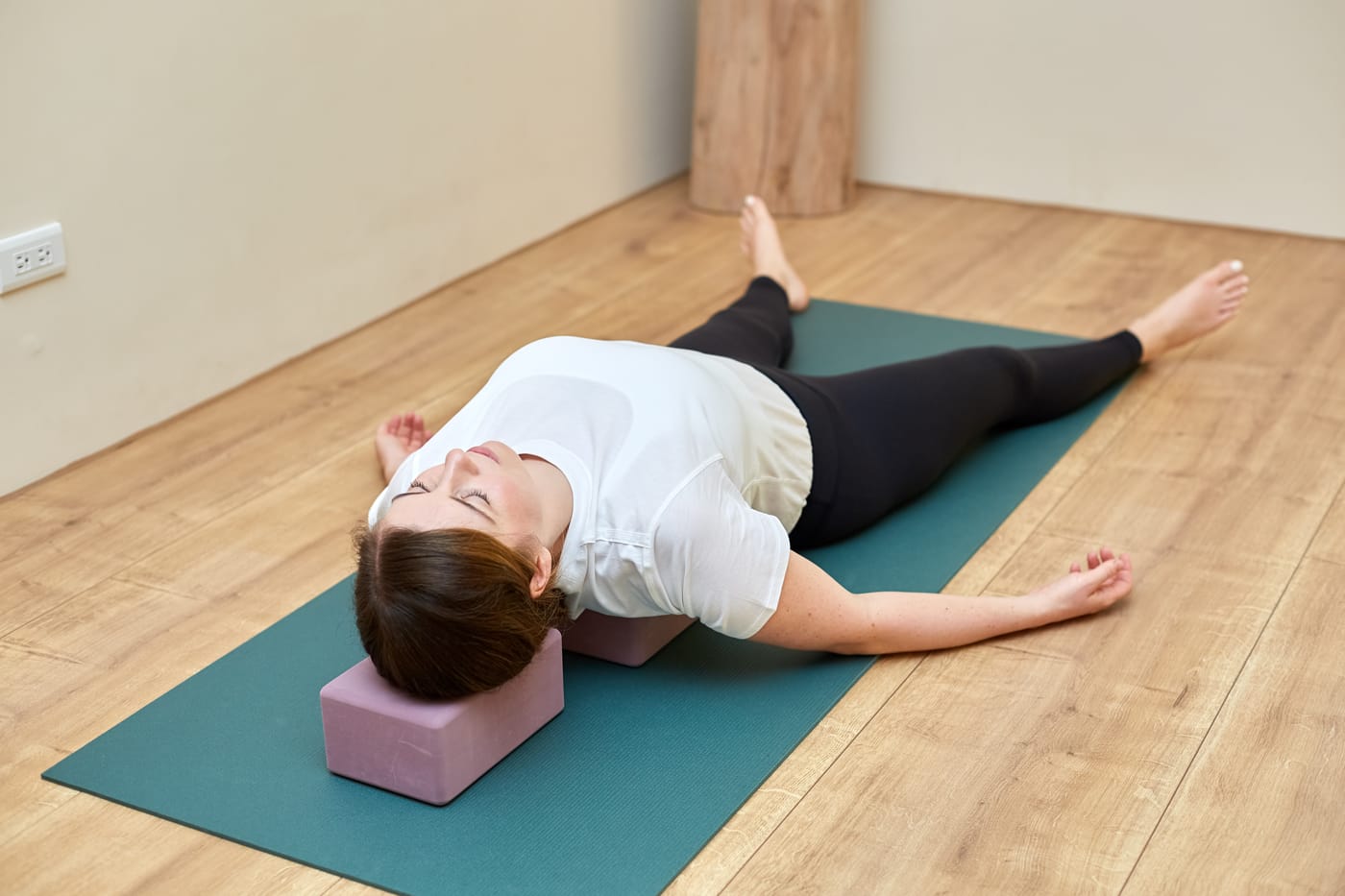
Place a bolster or a block lengthways behind you, positioned to sit under your shoulder blades — not under the lower back or the neck.
Lie back over it so the chest opens and drapes gently over the support, and let your head rest back. Add a folded blanket under the head if the neck feels strained.
Let the arms fall open to the sides, palms up, so the shoulders and chest can spread.
Choose your height: a low block or a bolster on its side for a gentle opening, a taller block on its edge for more. Every pose has a gentler option and a deeper one.
Stretch the legs out long, or keep the knees bent with the soles down if your lower back prefers it.
Find your edge — a real opening across the chest, never a strain. Then be still, breathe into the whole front body, and let the shape do the work.
Why practice it
A soft, passive heart and lung opener — the prop does the work while you simply rest and receive the shape.
Opens the chest and the front of the shoulders, encouraging fuller, easier breathing and countering a rounded upper back.
Works the Heart and Lung lines across the chest and arms, with the Kidney, Urinary Bladder, Stomach and Spleen lines supporting the spine.
Deeply calming. With the body held and nothing to hold, it is one of the kindest ways to melt open the front body — come as you are.
Before you go
Want the follow-along version?
No spam, ever. Unsubscribe any time. I'll only send Yin.
Check your inbox 🌙 your two-hour retreat is on its way.
Take care
Keep the support under the shoulder blades, not under the lower back — placed too low it can pinch the lumbar spine.
Mind the neck: if the head hanging back feels strong, support it with a folded blanket so the throat stays comfortable.
Approach cautiously with any neck or lower-back injury, and start with a lower prop height.
Come out slowly and pause, as reclined openers can leave you a little lightheaded when you rise.
Coming in & out
Into the pose
Set the prop under the shoulder blades and lie back over it.
Out of the pose
Come out slowly: bend the knees, roll gently to one side off the prop, and rest there for a breath or two before pressing up.
Common questions
What does Supported Fish stretch?
Draped back over a bolster or block, Supported Fish opens the chest and the front of the shoulders and gently counters a rounded upper back. Many people find their breathing feels fuller and easier, since the front of the ribs has room to expand.
Where should the bolster go in Supported Fish?
Lengthways under the shoulder blades — not under the lower back or the neck. Placed too low it can pinch the lumbar spine. Let the head rest back, and if the neck feels strong, slip a folded blanket under the head so the throat stays comfortable.
How long do you hold Supported Fish in Yin Yoga?
Most people rest here for 3–5 minutes. It's a passive, well-supported shape, so you can stay as long as the chest opening feels good and the lower back and neck stay easy. Come out a little sooner if you ever need to.
Is Supported Fish a good pose before bed or to relax?
Many people find it deeply calming — the body is fully held, so there's nothing to hold yourself. Choose a lower prop for a gentler opening, keep the neck supported, and rise slowly afterwards, as reclined chest openers can leave you a little lightheaded.
Supported Fish is one shape among many. When you'd like to put a whole sequence together into one long, slow practice, pop your email in and I'll send you my free two-hour Yin, restorative and Yoga Nidra retreat. Yours to keep.
No spam, ever. Unsubscribe any time. I'll only send Yin.
Check your inbox 🌙 your two-hour retreat is on its way.
Add this to your Home Screen: tap Share, then Add to Home Screen.