
Yin Yoga · Sleep · Nervous-system · Beginner
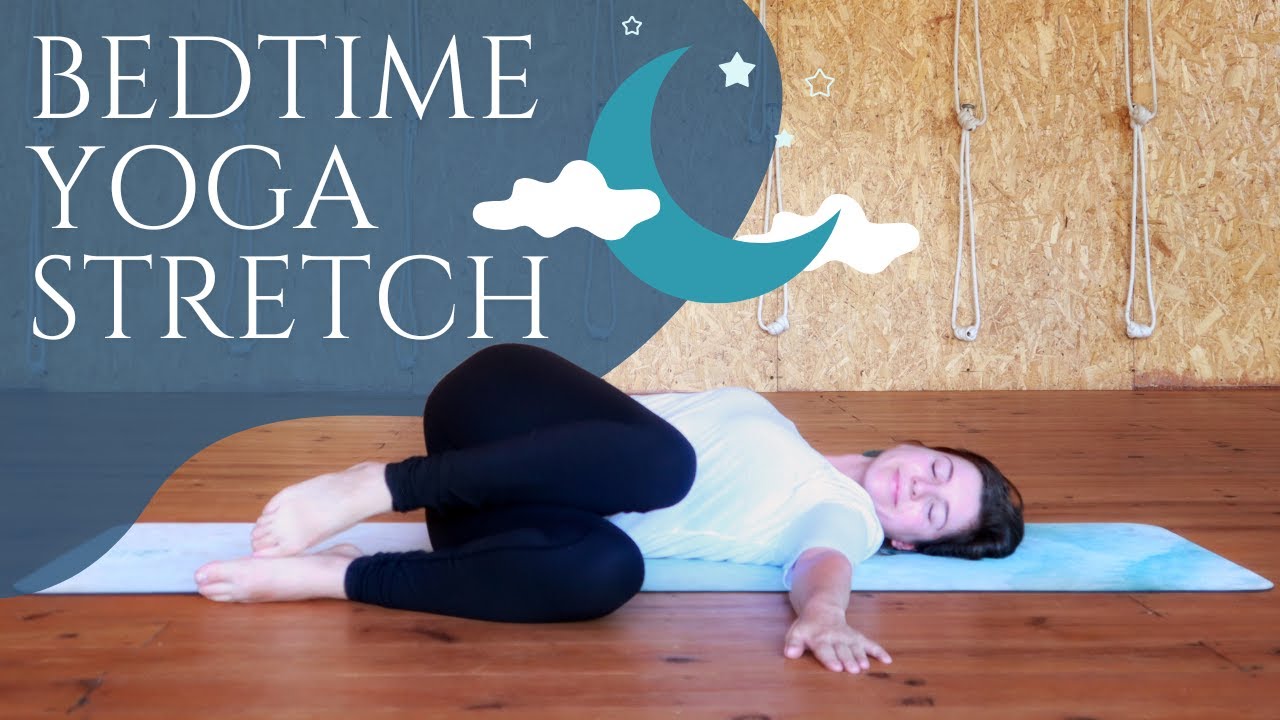
You never have to get off your back
Watch the full class on YouTubeBefore you go
No spam, ever. Unsubscribe any time. I'll only send Yin.
Check your inbox 🌙 your two-hour retreat is on its way.
Two poses. Both on your back. Twenty minutes.
It starts before any shape at all, lying in Corpse while Katie walks a wave of relaxation down through you — jaw, shoulders, spine, hips, legs — and says the thing worth hearing at that hour: the day is done, you’ve done your best, and anything still on your mind can be thought about tomorrow.
Reclined Cobbler’s Pose — reclined Butterfly — for four minutes. Soles together, knees simply hanging, feet further away for less and closer for more. Nothing pushed down. Her image for it is gravity as a blanket laid gently across you.
A rest, a moment with the knees hugged in, then the reclined twist for three full minutes each way. Shoulders stay on the floor, knees higher or lower to taste, and if turning your head bothers your neck, don’t.
Then Corpse, for as long as you like — or you can simply stop and get into bed, which is arguably the point.
Tap a time to jump to that moment on YouTube · tap a pose to open its page.
A gift from me
✦ A members-only class — free for you
Enjoyed this class? I'll send you my free two-hour Yin, restorative and Yoga Nidra retreat — two slow hours to properly switch off, yours to keep. Just pop your email in.
No spam, ever. Unsubscribe any time. I'll only send Yin.
Check your inbox 🌙 your two-hour retreat is on its way.
Most of it, yes. Every shape is done lying on your back, and nothing needs a mat or a floor — a firm mattress works. The class even ends by suggesting you might simply be ready to get into bed rather than sit up.
Further from the pelvis is gentler, closer is stronger. Katie's rule is to find the spot that's about 80% of what you could do — she calls that the most effective and the safest way to practise Yin. And the knees are never pushed down; you just let them hang.
Then don't look across. Turning the head is offered as the deeper option, and she says plainly that if it causes any niggle at all in the neck, keep your eyes towards the ceiling. The twist works perfectly well without it.
That's the design. Four minutes in one and three minutes each side in the other, with settling at the start and rest between — which at bedtime does more than six shapes rushed through would.
A short guided relaxation before any pose: attention travelling from the jaw down through the shoulders, spine, hips and legs, letting each part grow heavy. It's a couple of minutes, and it sets the tone for everything after it.
Or browse every class in the library.
