
Yin Yoga · Nervous-system · Full-body · Beginner · Stress
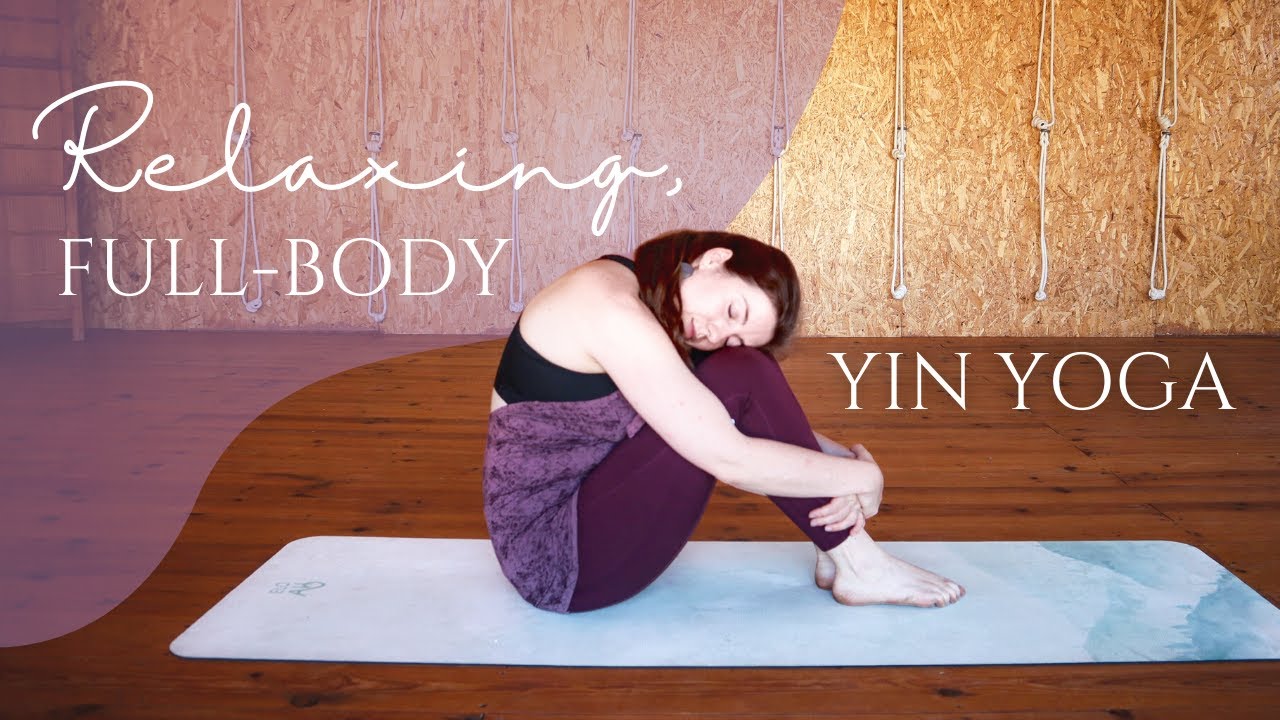
Forty minutes, mostly lying down, ending in a guided body scan
Watch the full class on YouTubeBefore you go
No spam, ever. Unsubscribe any time. I'll only send Yin.
Check your inbox 🌙 your two-hour retreat is on its way.
Four poses in forty minutes, and a quarter of the class is lying still at the end.
Reclined Cobbler’s Pose — reclined Butterfly — opens it for five minutes, soles together, knees left exactly where they fall. Feet further from the pelvis makes it lighter. Then a minute with the knees hugged to the chest to let it settle.
Caterpillar for four minutes down the whole back body, feet active rather than flexed or flopped, with a seated hug afterwards as the rebound.
Sphinx takes the spine the other way for three minutes — elbows forward if the lower back objects — released in Crocodile.
Reclined Twist is the long one: three full minutes each side, knees higher for more and lower for less.
Then the part that makes this class what it is. Twelve minutes of guided relaxation in Corpse — a body scan that makes each part heavy in turn, lifting and dropping the feet and hands and head, then a slow repeated cue, and Om Shanti three times to close.
Eighty per cent throughout, and Katie gives the reason: a hundred per cent, held for four minutes, over time is how people hurt themselves.
Tap a time to jump to that moment on YouTube · tap a pose to open its page.
A gift from me
✦ A members-only class — free for you
Enjoyed this class? I'll send you my free two-hour Yin, restorative and Yoga Nidra retreat — two slow hours to properly switch off, yours to keep. Just pop your email in.
No spam, ever. Unsubscribe any time. I'll only send Yin.
Check your inbox 🌙 your two-hour retreat is on its way.
Katie gives the reason plainly in this class: staying at full capacity in a shape for four minutes at a time can, over months, lead to discomfort and even injury. Eighty per cent is the number she uses throughout — so even if your feet will come right in to your pelvis, bring them back a fifth of the way.
Slide the elbows further forward — that lowers the backbend and is the first thing to change. If there's pain rather than sensation, come out of it; Katie says as much during the hold. Crocodile straight afterwards is the rebound that settles it.
That you're not simply dumped into the shape. In Reclined Butterfly it's a gentle press of the backs of the hands into the floor; in Sphinx it's the forearms pressing down and the chest still shining forward; in the twist it's pressing the palms into the mat. Soft, but not collapsed.
A guided relaxation. Katie walks your attention up through the body making each part heavy, has you lift and drop the feet, hands and head, then leads a simple repeated relaxation cue — relax my feet, my feet are relaxed — and closes with Om Shanti chanted three times. It's a substantial part of the class, not an afterthought.
Yes. Four poses, no props, nothing upright or balancing, and most of it done lying down. The long relaxation at the end is arguably the easiest introduction to what Yin is actually for.
Or browse every class in the library.
