

the journal · stress & calm
Yin Yoga for Stress & Anxiety: A Slower Way Back to Calm
you can't think your way out of wound up
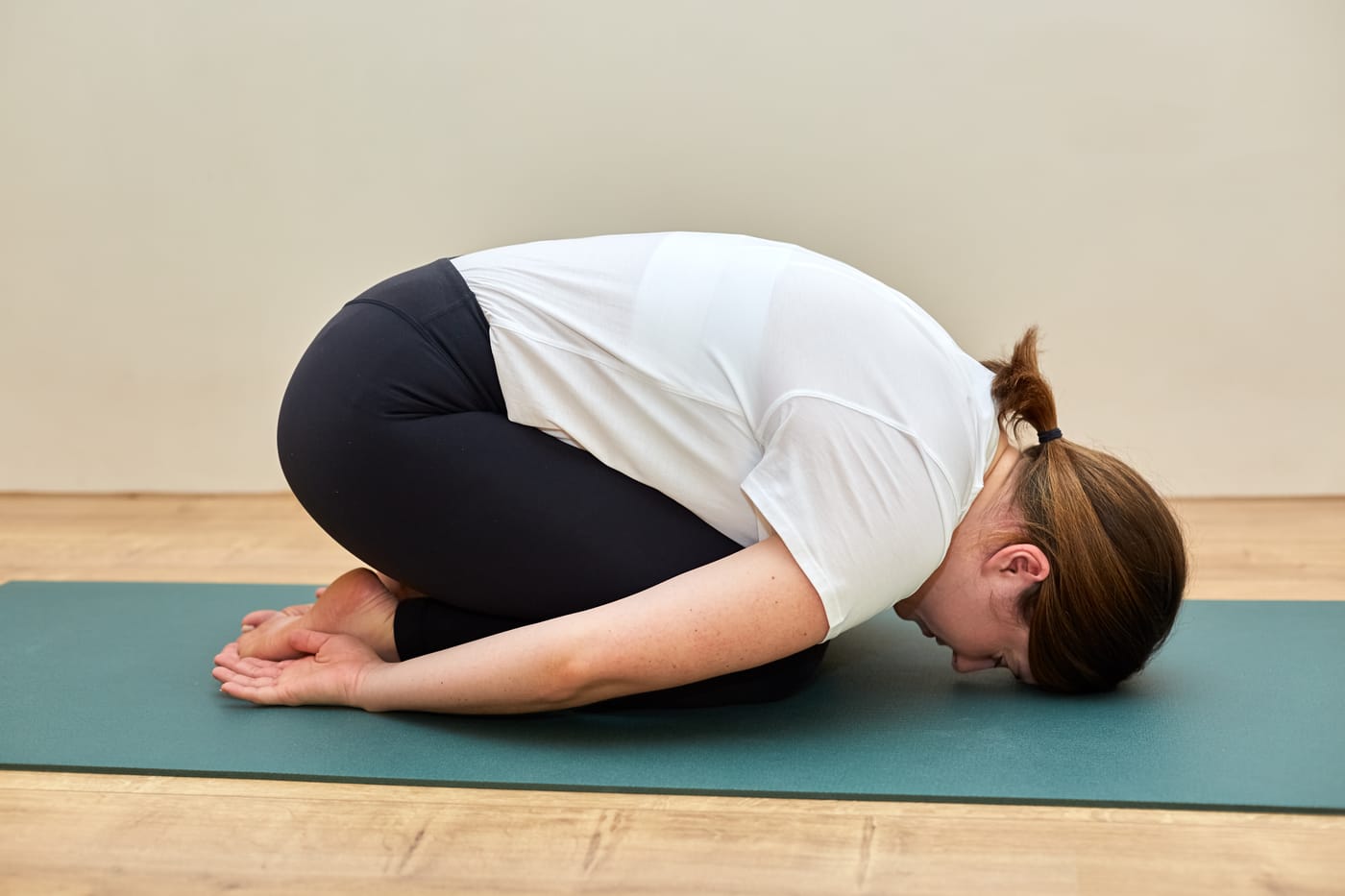
Stress doesn’t stay in your thoughts — it settles in the body, in a tight jaw, raised shoulders, a chest that never quite finishes exhaling. You can’t always think your way out of that, but you can, gently, stretch and breathe your way out of it. A slow Yin practice won’t solve whatever’s causing the stress, but it gives your nervous system a real chance to come down off high alert, even if only for twenty-five minutes.
How does Yin Yoga calm stress and anxiety?
Stress keeps the body a little braced, even when there’s nothing left to brace against — shoulders creeping up, breath staying shallow and high in the chest, long after the moment that caused it has passed. Yin works against that directly. The long, still holds — two minutes or more in each shape — give the body time to notice there’s nowhere to run and nothing to fight, and slowly let the bracing go. The slow, supported breathing that comes with staying still is widely associated with a shift toward the body’s rest state, which is the physical opposite of the wound-up, alert feeling anxiety brings.
None of this is about pushing through anything. Every shape is well supported — by a block, a cushion, or simply the floor — so there’s nothing to hold yourself in and nowhere to perform. You’re not doing the calming. You’re just getting out of its way.
What if you can’t sit still?
If your mind is racing, being told to “just relax” rarely helps — it can even make things worse. This practice doesn’t ask you to empty your mind or force yourself calm. Almost every shape below is lying down or propped, so there’s very little muscular effort holding you there and nowhere you need to balance. And if your mind wanders off mid-hold — it will, and that’s fine — you don’t need to chase it back. Just notice, and gently rest your attention on your next breath. That noticing and returning, over and over, is the whole practice. There’s nothing to get right.
The best Yin Yoga poses for stress and anxiety
A short sequence built from just a handful of grounding, well-supported shapes can do a surprising amount. Each links to its own page with cues, hold times and things to watch for:
- Child’s Pose — a small, folded-in shape to arrive in, forehead resting down.
- Caterpillar — a long, quiet forward fold that lets the whole back body soften.
- Supported Bridge — hips lifted onto a block, so the front of the body can open without any effort to hold yourself there.
- Reclined Twist — a gentle wring-out for the spine, lying on your back.
- Legs Up the Wall — a gentle inversion that’s often the single most settling shape in the whole practice.
- Corpse Pose — the final rest, where whatever’s left of the day is allowed to go.
Stress isn't a mood to fix. It's a state the body needs help leaving.
A short practice to follow along
If you’d rather be guided than remember a sequence, press play on one of these — both are free, gentle, and made to settle a busy nervous system:
Prefer to move without a voice narrating every second? The 25-minute Stress & Overwhelm Relief routine times each hold for you and chimes softly when it’s time to shift — you settle in, close your eyes, and let the timing take care of itself. Want more like this whenever you need it? Browse every calming class in the library.
How often should you practice for stress relief?
Any time you feel it building is a good time — a midday reset when the day’s got away from you, or a slow half hour in the evening to put it down before dinner. There’s no minimum that counts: even the six or seven minutes it takes to hold Child’s Pose and Legs Up the Wall back to back is a complete practice. What tends to help most isn’t one long session but coming back to it regularly, so your body starts to recognise the shape of “coming down” and finds it a little faster each time.
This is a gentle movement practice, not medical advice or a treatment for anxiety. If you’re managing a diagnosed anxiety or panic disorder, please treat this as a complement to the support you already have, not a replacement for it — and if a pose ever raises your distress rather than settling it, come out and rest in whatever position feels safest. If you’re pregnant or managing a back, hip or heart concern, take the gentler option in each shape and check with your doctor if you’re unsure, especially before inversions like Legs Up the Wall.
You don’t have to think your way out of stress. You only have to give your body somewhere quiet to put it down.
With warmth, Katie 🌿
While you're here
Want to practise along?
No spam, ever. Unsubscribe any time. I'll only send Yin.
Check your inbox 🌙 your two-hour retreat is on its way.
Common questions
Can Yin Yoga really help with stress and anxiety?
Slow, still, well-supported practice with long holds and unhurried breathing is widely associated with a shift toward the body's rest state — the opposite of the wound-up, on-edge feeling stress and anxiety bring. It won't switch off whatever is causing the stress, but it can give your body a real break from carrying it for a while.
What if my mind won't stop racing during a hold?
That's completely normal, and it doesn't mean it isn't working. You're not trying to empty your mind or force it quiet — every time you notice it's wandered, just gently rest your attention back on your breath. The coming back is the practice, not the staying still.
What if I can't sit still when I'm anxious?
You don't have to sit. Almost every pose in this practice is lying down or well supported by a prop, so there's very little to hold yourself in and nowhere you need to balance. If stillness itself feels hard some days, even a slower, more restless version of the shape still counts.
Is Yin Yoga or meditation better for anxiety?
They're not in competition — Yin gives an anxious mind something gentle to do (a shape to hold, a breath to follow) rather than asking it to sit with nothing, which some people find easier to begin with. If you already have a meditation practice, the stillness at the end of a long hold is a lovely place to let it happen.
Can I practice this if I have a diagnosed anxiety disorder?
Many people do, and find the long, supported holds genuinely soothing. But this is a gentle movement practice, not a treatment — it's not a substitute for therapy or medical care, and if a pose ever raises your distress instead of settling it, that's your cue to come out and rest in whatever position feels safest. Please treat this as a complement to your care, not a replacement for it, and check with whoever supports you if you're unsure.
From the mat
Ready to actually practice?
✦ A members-only class — free for you
Reading about Yin is one thing — feeling it is another. Whenever you're ready, pop your email in and I'll send you my free two-hour Yin, restorative and Yoga Nidra retreat. Two slow hours to properly switch off, yours to keep.
No spam, ever. Unsubscribe any time. I'll only send Yin.
Check your inbox 🌙 your two-hour retreat is on its way.