
Yin Yoga · Sleep · Nervous-system · Beginner · Hips
A breath to settle, two long shapes, and a twist to sleep on
Watch the full class on YouTubeBefore you go
No spam, ever. Unsubscribe any time. I'll only send Yin.
Check your inbox 🌙 your two-hour retreat is on its way.
A short bedtime practice with very little in it, which is the point at that hour.
It opens sitting still with 4:8 breathing — in for four, out for eight. The long exhale is what does the work, and a few minutes of it changes the tone of everything that follows.
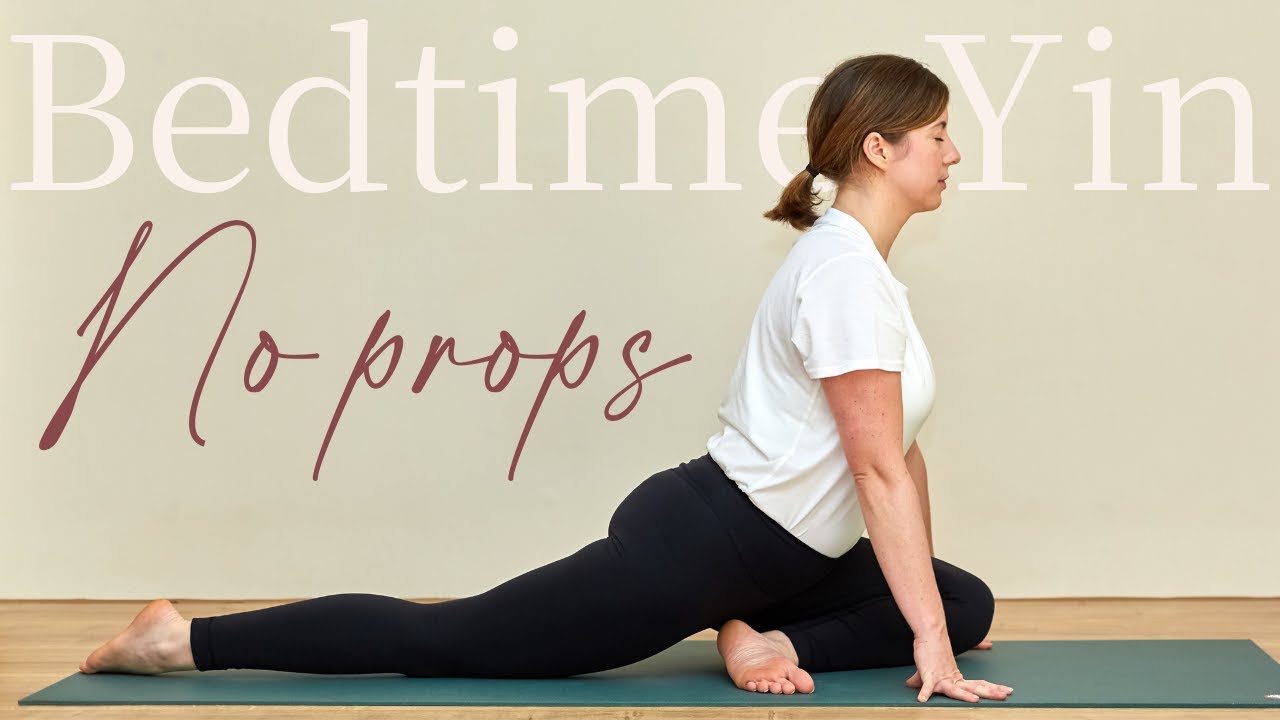
Then Swan for three minutes a side, with Sleeping Swan offered as the deeper version if you want to fold forward and rest your head on your hands. This is the big one for the glutes, the outer hip and the groin, and a Downward Dog between the sides shakes it out.
Child’s Pose for a minute, and then everything happens lying down: a reclined twist held three full minutes each way, shoulders staying on the floor, and three quiet minutes in Corpse to close.
No props, nothing to fetch, nothing that needs you to be flexible. If your forehead doesn’t reach the mat in Child’s Pose, stack your hands under it.
Tap a time to jump to that moment on YouTube · tap a pose to open its page.
A gift from me
✦ A members-only class — free for you
Enjoyed this class? I'll send you my free two-hour Yin, restorative and Yoga Nidra retreat — two slow hours to properly switch off, yours to keep. Just pop your email in.
No spam, ever. Unsubscribe any time. I'll only send Yin.
Check your inbox 🌙 your two-hour retreat is on its way.
Breathe in for a count of four and out for a count of eight, through the nose if you can — filling the belly, then chest, then throat on the way in, and emptying in the same order. The long exhale is the part that settles you, which is why it opens a bedtime class.
Swan is the upright version, chest lifted, hips square to the front of the mat. Sleeping Swan is the same shape folded forward onto the forearms with the head down. The class offers Swan first and Sleeping Swan as the deeper option, and staying upright the whole time is a complete practice.
Katie's cue in the class is to draw the feet gently towards each other, as though there were magnets in them — that closes the angle at the hip and takes pressure out of it. Slipping a cushion under the hip that's hanging helps too, and so does staying upright in Swan.
None at all. If your forehead doesn't reach the mat in Child's Pose, stack your hands underneath it — that's the only adjustment the class asks for, and your own hands are the prop.
Or browse every class in the library.
