
Yin Yoga · Hips · Flexibility · Nervous-system
A practice about endurance — and about knowing when to stop
Watch the full class on YouTubeBefore you go
No spam, ever. Unsubscribe any time. I'll only send Yin.
Check your inbox 🌙 your two-hour retreat is on its way.
Three poses. Five minutes in each. That’s the class, and the length is the point of it.
Katie says as much before anything starts: holding a shape for five minutes is physically and mentally hard, often frustrating, sometimes just boring — and you finish stronger than you started, because you’ve spent five minutes not listening to the voice telling you to stop.
But she puts the other half next to it, which is the part most classes leave out. Value comes from learning when to quit as much as it does from learning not to. Coming out of a pose that isn’t for you today is the practice too.
Child’s Pose goes first, five minutes, which is longer than it sounds. Build it to last — cushion under the hips, blanket under the knees — or lie on your back and hug the knees in, which is the same shape with the weight taken out.
Dragon is five minutes a side, with a Downward Dog between. The back knee sets the depth. Blocks or books under the hands raise the floor. And close your eyes, because watching your own fingers is what makes you fidget.
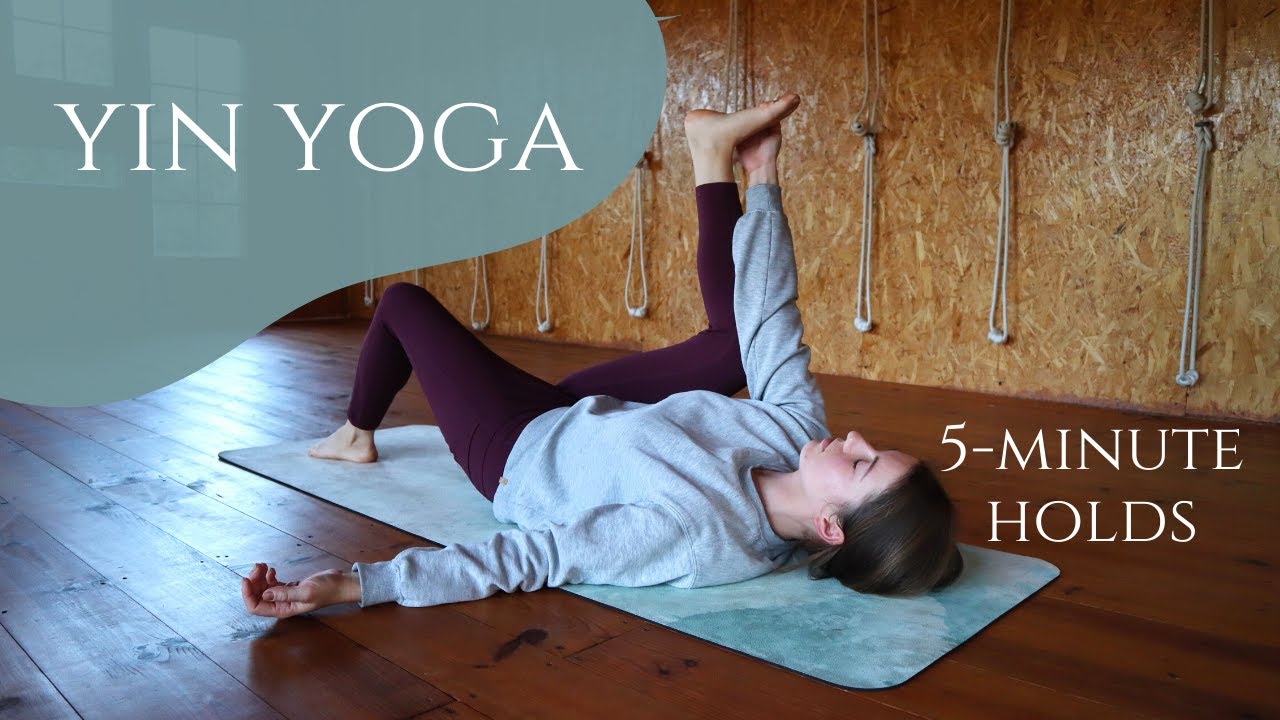
Happy Baby for five, half or full, with the halfway point called so you can swap. Then Corpse.
Eighty per cent of your capacity throughout. There is no impressive version of any of these, and she says so.
Tap a time to jump to that moment on YouTube · tap a pose to open its page.
A gift from me
✦ A members-only class — free for you
Enjoyed this class? I'll send you my free two-hour Yin, restorative and Yoga Nidra retreat — two slow hours to properly switch off, yours to keep. Just pop your email in.
No spam, ever. Unsubscribe any time. I'll only send Yin.
Check your inbox 🌙 your two-hour retreat is on its way.
Katie's answer at the top of the class is the honest one: it's physically and mentally hard, sometimes frustrating and sometimes boring, and you come out of it stronger than you went in. You learn to ignore the voice telling you to quit, and that's a skill that leaves the mat with you.
Then come out, and that's not failure. She's unusually direct about this: value comes from learning when to quit as much as from learning not to. Adjust, rest, or take the alternative — the practice is meant to teach you both halves.
It is, and it's less restful than it sounds. Take the time at the start to make it sustainable — a cushion or block under the hips, a folded mat or blanket under the knees, knees as wide as you like. If it isn't available today, lying on your back with the knees hugged in is the same shape with the pressure taken off.
The back knee sets the intensity — bring it closer for less, slide it back for more. Hands on blocks or books raises the floor. The front foot can stay between the hands instead of outside them. And Katie's own tip is to close your eyes, because looking at your fingers and toes is what starts the fidgeting.
She calls that a common misconception in this class. You keep the neck and shoulders soft, but you stay a little active in the lower body rather than collapsing into the shape. Relaxed isn't the same as dumped.
Or browse every class in the library.
