
Yin Yoga · Stress · Nervous-system · Beginner
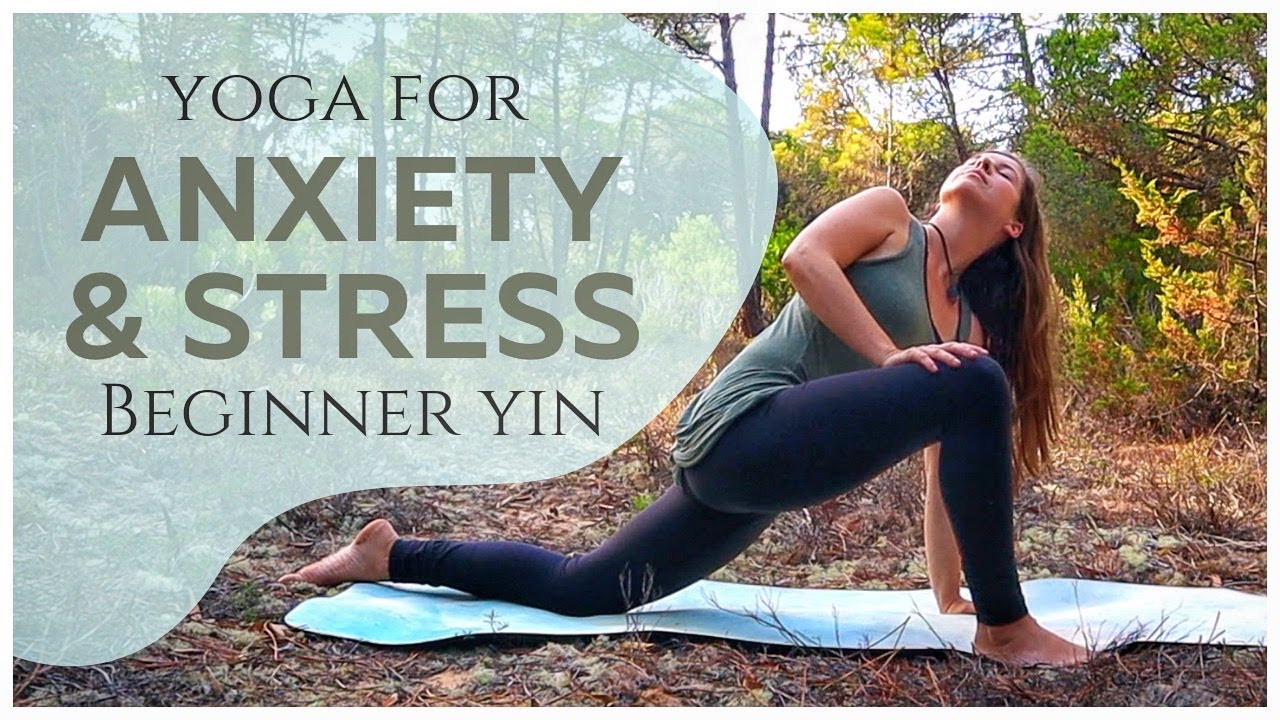
Six minutes of sitting still before a single pose
Watch the full class on YouTubeBefore you go
No spam, ever. Unsubscribe any time. I'll only send Yin.
Check your inbox 🌙 your two-hour retreat is on its way.
There are only four Yin poses in this thirty-five minutes. The rest is sitting, breathing and resting, which is rather the point.
It opens with six minutes before a single shape: twenty slow breaths, hands at the chest, and Katie’s line that comes back through the whole class — you are not your thoughts, you are the observer of your thoughts. Then some loose movement to shake the day off.
Child’s Pose for two minutes. Dragon for a minute a side, each one rolling into Twisted Dragon — she describes it as wringing out a dish cloth — with a Downward Dog between and after.
Sphinx for two minutes across the chest, resting in Crocodile, then Seal for one minute if the deeper backbend is welcome. Crocodile again, and while you’re there, three things in your life that are going well.
It closes the way it opened: twenty breaths, and a deliberate smile that nobody can see.
If you only have six minutes tonight, do the beginning.
Tap a time to jump to that moment on YouTube · tap a pose to open its page.
A gift from me
✦ A members-only class — free for you
Enjoyed this class? I'll send you my free two-hour Yin, restorative and Yoga Nidra retreat — two slow hours to properly switch off, yours to keep. Just pop your email in.
No spam, ever. Unsubscribe any time. I'll only send Yin.
Check your inbox 🌙 your two-hour retreat is on its way.
Because arriving is the hard part when you're wound up. Katie opens with twenty slow breaths and a simple settling practice, then some gentle movement to shake things loose, before any shape at all. If you're short of time, that opening is arguably the most useful part of the class.
Very. Her cue during Dragon is that the urge to sigh is the body letting go of tension, so don't fight it — let one out on the exhale. The same goes for the sighs she offers coming out of Sphinx and Seal.
Depth. Sphinx rests on the forearms; Seal straightens the arms for a stronger backbend. Seal is held for a minute rather than two, and if it's too much the answer is to walk the hands further away and wider apart — or to stay in Sphinx, which is a complete practice on its own.
Resting in Crocodile, Katie asks you to think of three things in your life that are going well right now — big or small, it doesn't matter which. It's a small piece of gratitude practice, and it sits where you're most likely to actually do it.
Slow breathing and long, quiet holds help many people feel calmer and less braced, and that's what this class is for. It's general wellbeing rather than treatment, though — if anxiety is affecting your daily life, it belongs with a doctor or therapist, and this can sit alongside that rather than instead of it.
Or browse every class in the library.
