
Yin Yoga · Nervous-system · Stress · Flexibility
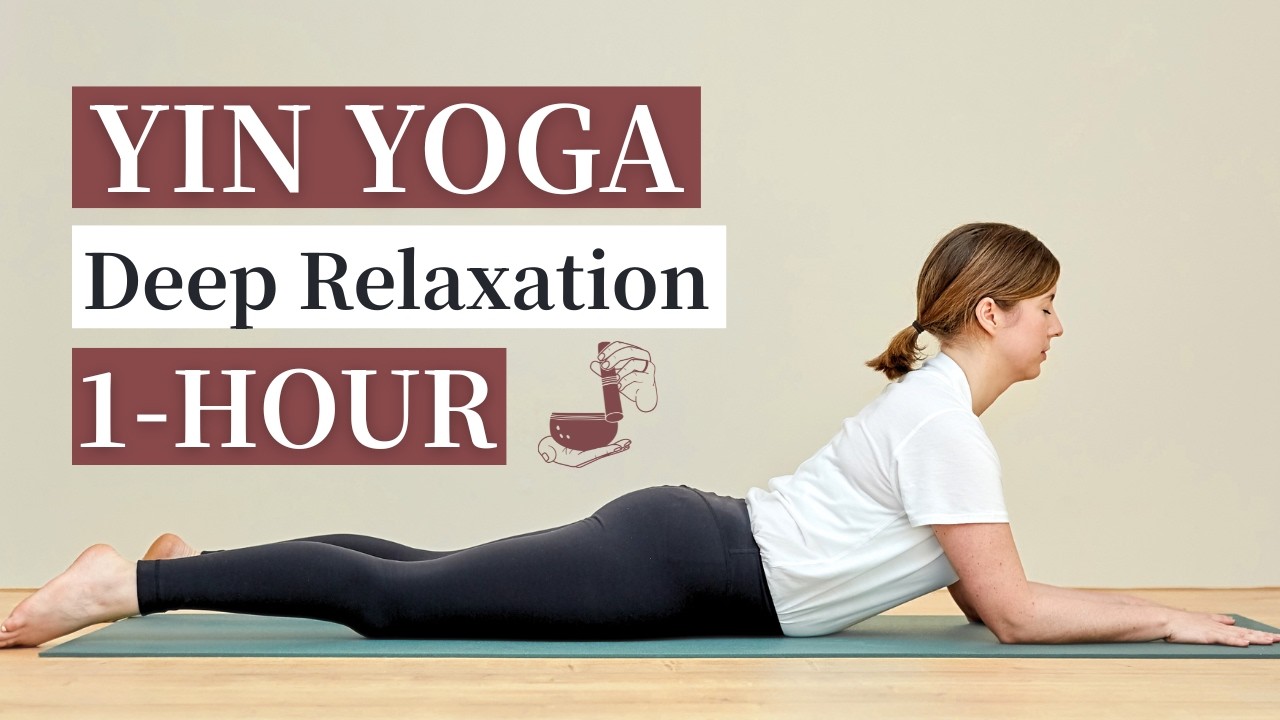
Backbends, then inner thighs — the line this practice follows
Watch the full class on YouTubeBefore you go
No spam, ever. Unsubscribe any time. I'll only send Yin.
Check your inbox 🌙 your two-hour retreat is on its way.
An hour built around the kidney meridian line, which Katie explains before anything starts — and which you don’t need to believe in for the class to work on you.
The line runs from the little toe, up the inner leg, to the tailbone and up the spine. So the practice is two things: backbends and inner thighs.
Sphinx for four minutes with a cue worth keeping — a turtle extending its neck out of its shell, rather than collapsing into the shoulders. Then a minute face down in Crocodile.
Saddle for three minutes, propped as high as your knees need, or half saddle one leg at a time.
Sphinx or Seal for five, your choice, and Crocodile again the other way.
Then the inner leg. Butterfly for four minutes, Half Butterfly for three each side, Dragonfly — she calls it Straddle — for three, with windshield wipers between each.
Caterpillar for five, countered with Hammock, then Corpse.
The image that makes the backbends make sense: holding one is kinking a garden hose. The point isn’t the kink. It’s the rush when you let go.
Tap a time to jump to that moment on YouTube · tap a pose to open its page.
A gift from me
✦ A members-only class — free for you
Enjoyed this class? I'll send you my free two-hour Yin, restorative and Yoga Nidra retreat — two slow hours to properly switch off, yours to keep. Just pop your email in.
No spam, ever. Unsubscribe any time. I'll only send Yin.
Check your inbox 🌙 your two-hour retreat is on its way.
An idea from traditional Chinese medicine, and one Yin borrows. Katie explains it at the start as energetic highways carrying qi around the body. It shapes which poses go in the class rather than being something you need to believe in — as she says, you can know nothing about it and still get everything out of the practice.
From the little toe, along the sole of the foot, up the inner side of the leg, back to the tailbone, then up the spine. That's why this hour is mostly inner thighs and backbends: the poses follow the line.
Katie's image for a backbend. Holding Sphinx compresses the lower back — kinking the hose, so nothing flows. Releasing it lets everything rush through at once. It's a nice way to understand why the rest afterwards matters as much as the pose.
Prop the hips higher — a block, two blocks, cushions, whatever gets you to a height your knees accept. Or take half saddle, one leg extended at a time; Katie calls the halfway point so you can swap. Knee pain is a reason to come out, not to breathe through.
Whichever you want, and she's explicit that there's no pressure. Seal is the stronger backbend with straight arms; Sphinx on the forearms is a complete practice. Doing Sphinx twice is a perfectly good version of this class.
Or browse every class in the library.
